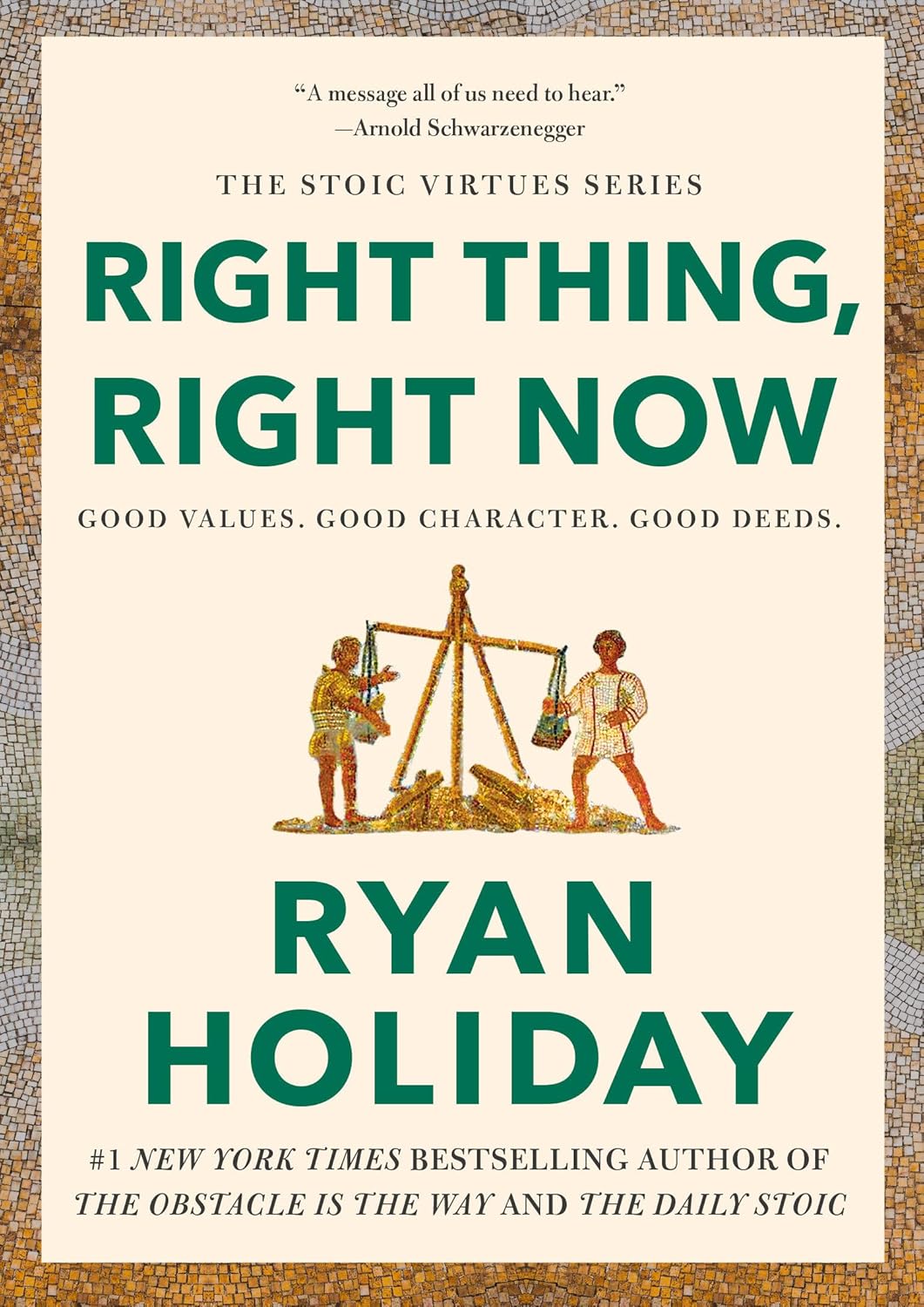
Reminder if you're part of the book club and have thoughts on this month's book I encourage you to publish them and send me a link so I can include it in next week's wrap up of our book for January.
A core topic of discussion in Holiday's look at justice in Right Thing Right Now is the use of power by those with power. What does the use of that power show about the character of a person? How does the other party with less power feel about the power being exerted over them?
One key thing we see with those in power is that they often work hard to ensure that any problems aren't their fault1, though this isn't just people in power. I've found that abdicating responsibility for the outcomes of our actions is something that many people do regularly, it's just those with power that can make this stick. They can make it stick via regulations that absolve them of fault, or via bluster and asshattery that goes on long enough everyone else gets fed up trying to hold them to account and they walk away without dealing with the consequences of their actions.
If you're powerful enough, this bluster and abuse can empower those that look up to you to do terrible things on your behalf then you can claim you meant nothing by it and walk away without consequences.
For those of us not famous it's always useful to ask if we're supporting someone in power "punching down" or if we're supporting those with less power2 in their push for justice?
Don’t become the Monster
At the same time as trying to ensure we use any power we have to support those with less power, we have to try and ensure that we don't become the monster we were trying to fight3. We should always be looking to expand the circles of those that we count as human and extending any perks of that class to them.
Holiday cautions us that as we fight the monsters in our society to be sure that we don't, via our anger at injustice, become the monster ourselves4. In a recent podcast Rich Roll and Josh Szeps investigated this topic, with Josh saying that maybe people just want to live their life sometimes without fearing cancel culture and language police jumping on them5. When we jump on the slightest misstep, are we becoming the monster?
As an example of someone who fought injustice quietly without becoming a monster Holiday cites Ghandi, who until his last breath pushed for non-violence and unity amongst groups that had typically hated each other. Unfortunately, without his influence and example of peace they fell back into fighting almost immediately.
For us, when we're fighting we also need to take responsibility for any missteps we make along the way. Without taking responsibility for our faults, there can be no justice6. This seems hard in culture because your misdeeds are often highlighted as obvious examples of being two-faced and that anything further you say is not worth listening to.
To grow as a society we need to allow room for growth. In my late teens and early 20's I would have most closely identified, and argued for, very conservative view points. I was staunchly against the LGBTQ+ community and thought and spoke poorly of First Nations in Canada. I'm lucky that there was no social media for the remnants of my former smaller self to show through and that I get to exist today as someone that is inclusive.
How do we grant people the same ability to change as they grow?
Don’t expect gratitude
A nefarious weapon of injustice is gratitude. The idea that we should be thankful when we're granted basic rights. That First Nations should thank the government for giving land back that was stolen in the first place. I've recently heard this called weaponized gratitude and it is expected, unfairly, of those without power by those with power.
As the story linked above says, a woman jailed as a point of leverage with her country because it owed billions should not have to be thankful that she was finally released because her country did the right thing. She should never have seen jail in the first place and certainly shouldn't be thankful to have her ordeal over after years of imprisonment.
We should not expect gratitude when we do the right thing and act justly. We do it because it's the right thing.