While this newsletter is free, membership helps support my work so that it can keep showing up in your inbox.
Last week we looked at how diversity improves decisions, today let's look at how we can improve our decisions when we're faced with personal decisions.
One of the first questions I ask when evaluating a decision is "what would it take to...". An example I asked a few years ago was "what would it take to make YouTube my full time income." After that I looked at my sponsorship rates and adsense payments and realized that I'd need to publish many videos daily for YouTube to become a viable short-term income source. This was clearly not possible, so I decided that slow growth was fine and I would just see what happens.
This also brought up the question of sponsorships and my internal feeling that I hated them. I didn't like the back and forth emails and wrangling payments. I wasted far more time negotiating than I earned in revenue.
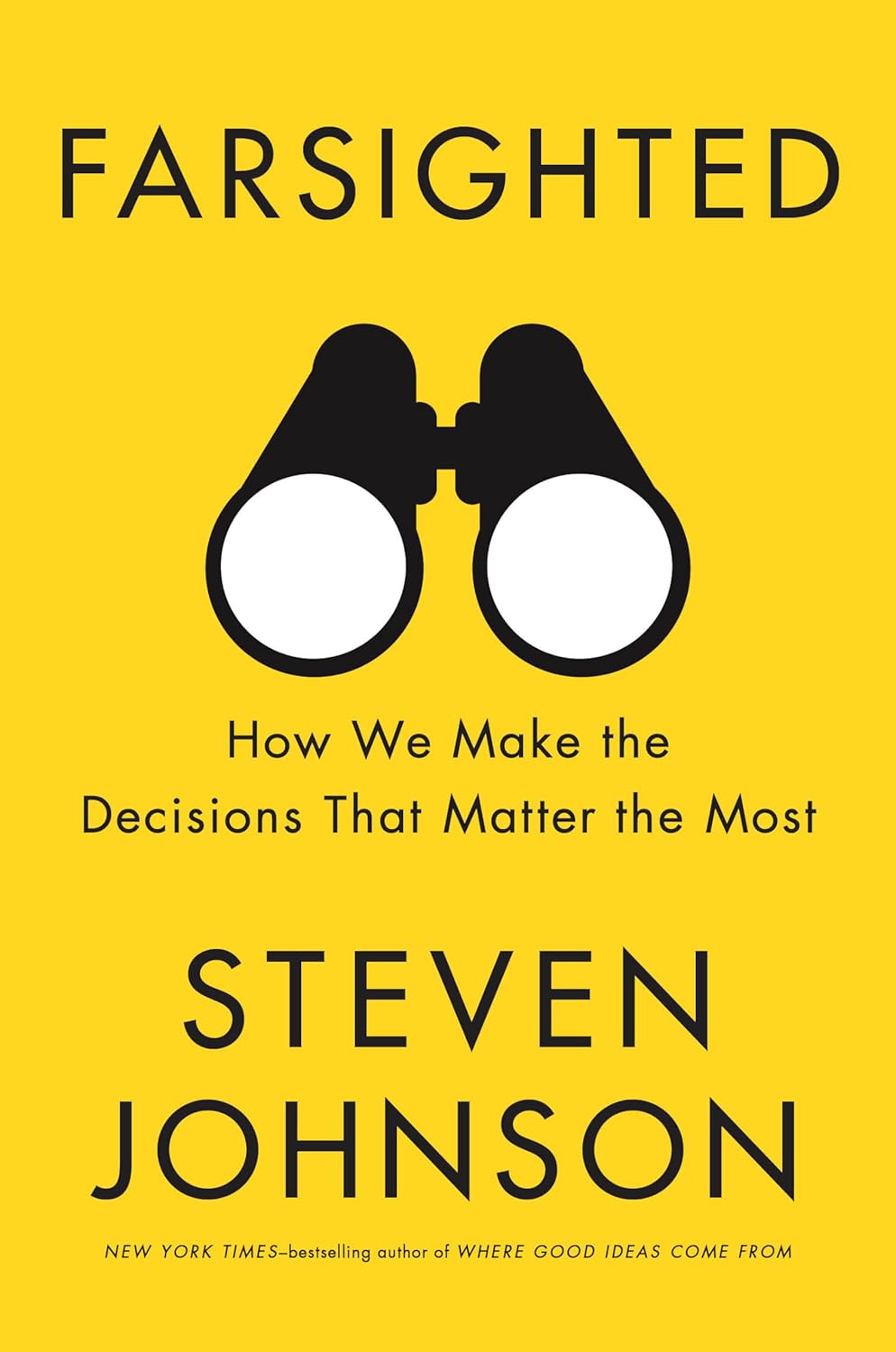
Even though an exercise like this provides benefits it doesn't allow me to see my blindspots because I can never make a list of the things I wouldn't think of1. They are by definition, unknowable. While Johnson says one of the better ways to see your blindspots is diverse opinions, another good suggestion is running simulations.
This is why the military runs war games, to evaluate their practices and see if they hold up. Far from being a failure if they don't it's a learning experience which allows militaries to be better prepared in the event of real battle, but only if you're willing to learn from the simulation.
The Millennium Challenge was a military exercise run in 2002 where the US Military was intending to test their new methods of networked warfare along with current and future weapons and tactics. Running the Red Team was Lt. Gen. Paul Van Riper who took his job seriously knowing that strong effort to dismantle the Blue Team would save lives if he could find holes in their plans.
Oh boy, did he find holes by not following the assumptions that the Blue Team made about the capabilities of his forces. He didn't use radio communications because they'd be vulnerable to the superior electronic capabilities of the Blue Team, he sent motorcycles out to hand deliver orders. He relied on old light signalling technology to launch planes thus denying the enemy radio intelligence.
He didn't use radar to pinpoint the approaching fleet because that would give away his resources and make them vulnerable to destruction. Instead he sent out many small ships to find the enemy and then used this information to send a massive salvo of missiles which overwhelmed the defence capabilities of the Blue Team.
His tactics resulted in the Red Team wiping the floor with the Blue Team and would have resulted in more
than 20,000 casualties in a real war scenario.
Unfortunately Blue didn't want to learn from their mistakes. They reset the scenario and limited what Lt. Gen Riper could do, constraining his innovative ideas for working around the superior electronic capabilities of the Blue Team. They wouldn't allow him to shoot down the approaching planes, and he had to use his radar so that the Blue Team could see their resources and thus destroy them.
The result was deemed as a success for the military tactics that Vice Admiral Mayer wanted to validate, though it's hard to call that a success when you look at it from an outside view.
Straw vs Steel
So what can the individual learn from this? We can't run war games and spend millions on computer simulations, but we can stop ourselves from falling into the trap of choosing the worst arguments that challenge our ideas. Instead of straw manning the arguments we don't like we should steel man them.
What are the strongest arguments that say your preferred solution will fail? How would you mitigate the fallout from those issues? What extra safeguards do you need in place so that you can deal with the outcomes you don't like?
If that sounds like a lot of work, it is. One of best things you can do to help your decisions have better outcomes is to take more time to make a decision2. With more time you have a higher chance of seeing the issues and then being able to deal with them.
You may not have a general yelling at you, or be looking at 20,000 computer simulated causalities, but you can take the time to ask yourself hard questions and find the uncomfortable answers that will cause your decisions to have better outcomes.