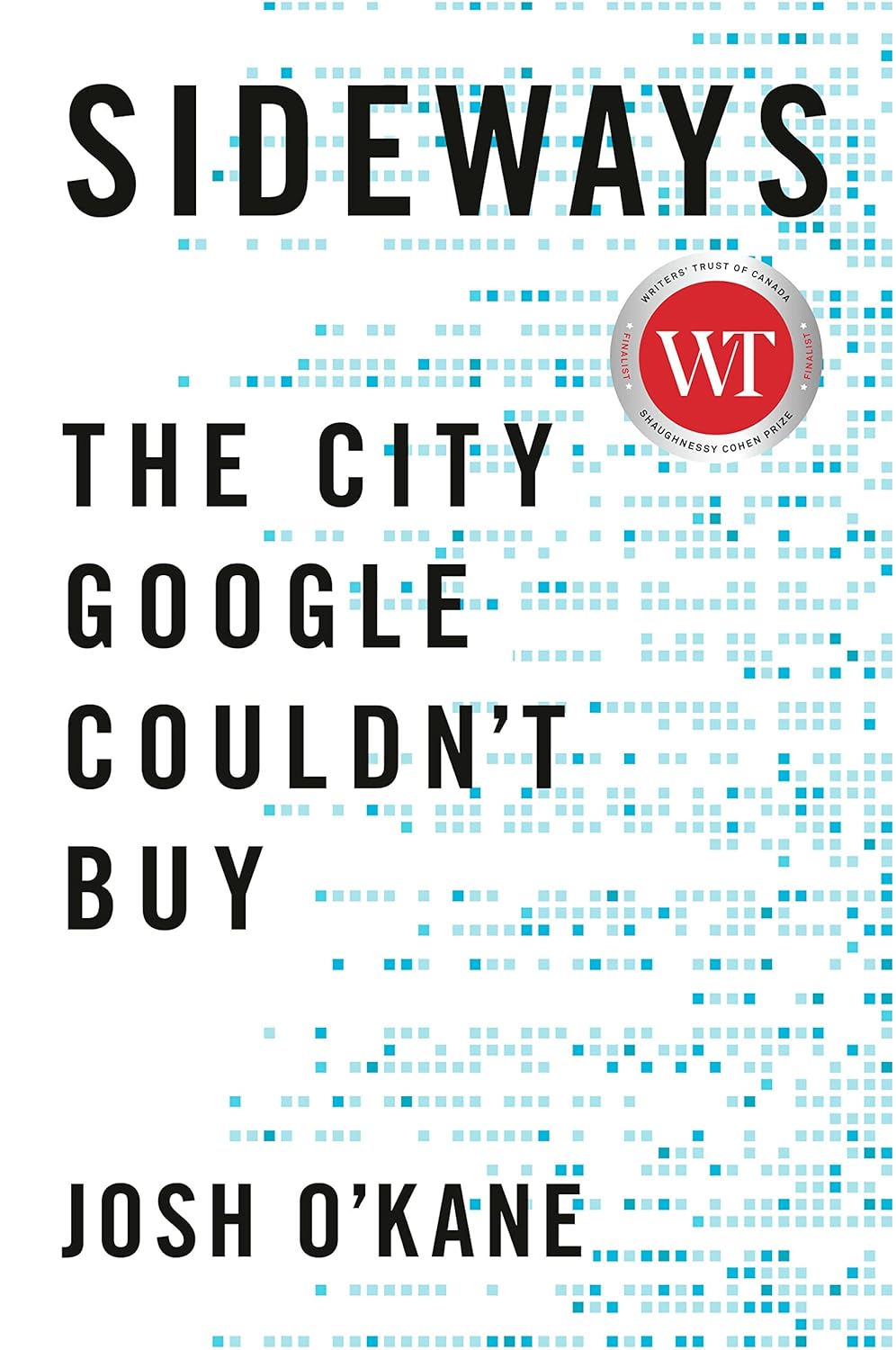
Sideways - The City Google Couldn't Buy - Josh O'Kane

Sideways - The City Google Couldn't Buy - Josh O'Kane

Josh O'Kane

MAYBE NONFICTION

Started: Dec 22, 2022

Finished: Dec 29, 2022

Review

This is a book about the hubris of Google thinking that despite what all levels of government told them about the Toronto Waterfront project, they would not be able to simply assume their way into more land and more tracking of people. It's a good look at how Big Tech companies get us to believe that they're solving problems and bringing value to people, when they're really enriching themselves and the people on the receiving end of technology see little tangible benefit.

Read my longer review of Sideways.

Notes

- [[IBM]] showed up in [[Rio de Janeiro]] with technology to build an operations center to manage [[traffic]] and [[natural disaster]]s. While IBM made lots of money, [[Rio de Janeiro]] didn't see the same benefits. This is [[capitalist|capitalism]] at work often, money for companies at the expense of society not getting the [[public infrastructure]] revamps that are really needed because it's not as sexy as tech. Page 10, 11
- [[Dan Doctoroff]] headlined rezoning [[New York]] to make better use of space, but deeper analysis found that preserved places for wealthier homeowners at the expense of [[BIPOC]], and other vulnerable groups whose housing was already precarious. Page 25
- so a return to [[redlining]] really
- [[Smart Cities Big Data Civic Hackers and the Quest for a New Utopia - Anthony M Townsend]] Page 31
- [[The Rise of the Creative Class--Revisited - Richard Florida]] Page 36
- seems that [[Dan Doctoroff]] was an abusive male executive but called it his "management style". He used yelling and other absurd tactics to get his way like a petulant child and then touted his success. Page 38
- again tech companies look for computer solutions to "move people better". They discount [[bike infrastructure]] which does move people fast and cheap, because that calls into question [[car culture]] and isn't as sexy as...something, something...computer. Page 40
- technology companies often view people as [[productivity]] and [[profit]] tools before as actual human beings that have to function in their productive utopia under unsustainable conditions that are required for the "numbers" to work. Page 47 ^e1cc05
- [[The New Digital Age - Eric Schmidt Jared Cohen]] Page 49
- the experts in how cities work had to spend time convincing [[Larry Page]] that his ideas about how [[city planning|city design]] should work, did not in fact work once you put these people in it that didn't simply act like profit centers. [[Larry Page]] assumed because he had sucess with [[Google]] he must be smart enough to change to cities work. He assumed he was smarter than the experts in their own field. Page 68 ^fac453
- companies like [[Amazon]] host "bids" for cities to become their new headquarters, or locations for shipping facilities because those bids involve cities giving these [[tech giants]] major [[property tax]] breaks (and other tax breaks) that save them billions. Page 90
- [[Walmart]] does this as well and then builds out [[big box]] stores that cities can't support in 25 years when Walmart moves on to get tax breaks again.
- [[Losing the Signal - Jacquie McNish Sean Silcoff]] Page 109
- [[The Smart Enough City - Ben Green]] Page 211
- [[The Age of Surveillance Capitalism 190920202307]] Page 233
- people bill elementary [[schooling|school]] as innovation because they add computers to the mix. Even when [[schooling|education]] tech doesn't show the benefits that everyone thinks it will because it comes from a tech first path that tries to retrofit solutions instead of a solutions first path. Page 261
- we design roads and cities for [[self-driving vehicle]] to move people faster because it's sexy. Bikes move people well and cheaply, but investing in proven [[public infrastructure]] isn't sexy for tech companies who want to be seen as saviours. Page 271 ^188afe