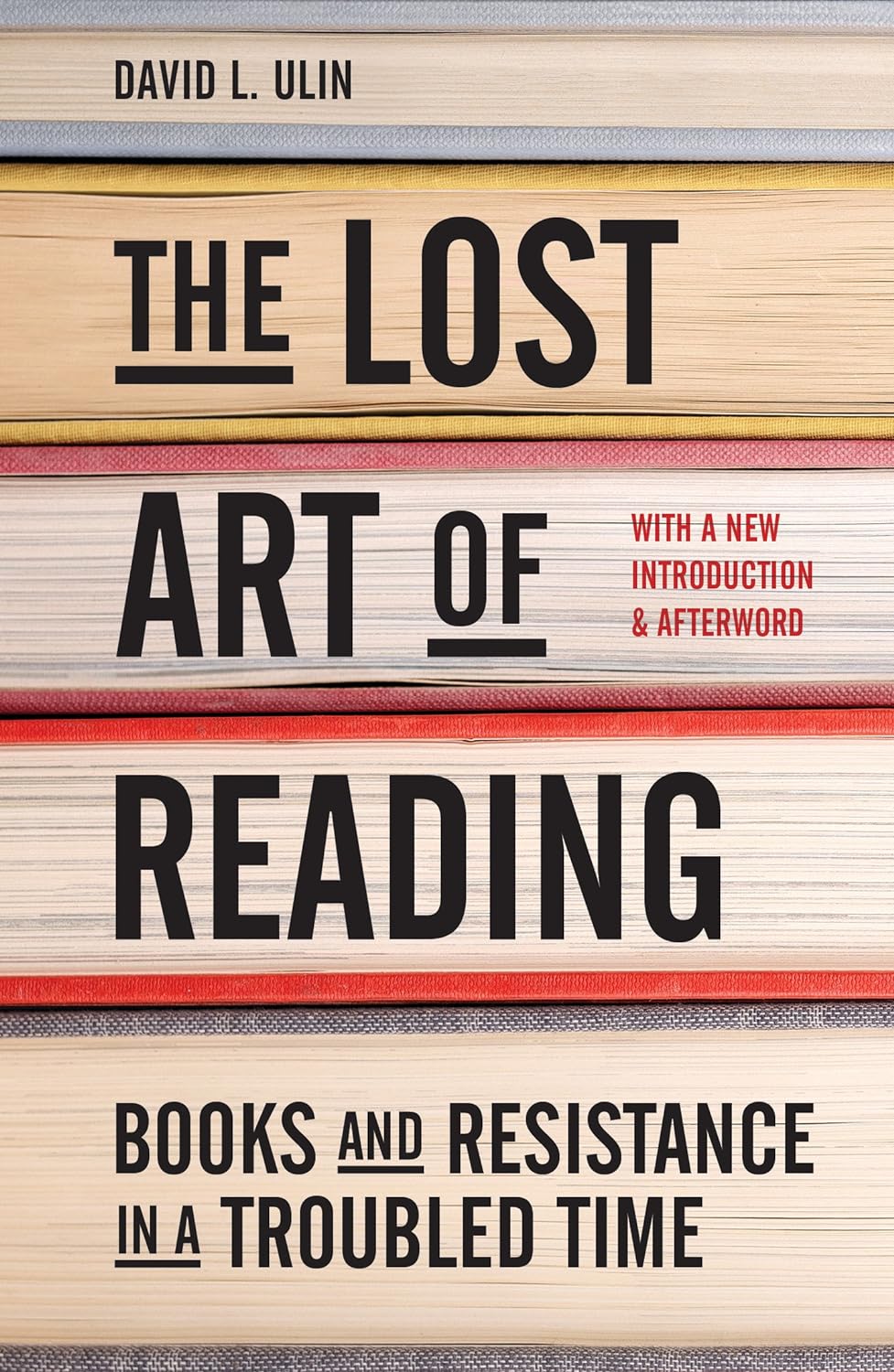
The Lost Art of Reading

The Lost Art of Reading

David L Ulin

RECOMMENDED NONFICTION

Started: Feb 08, 2023

Finished: Mar 09, 2023

Review

This is a book examining the cultural significance of reading. We'll pull out a few highlights.

David Ulin talks about the purveyors of fake news working hard to normalize that which should never be normalized. We see it both in the content the anti-Semitic content that Elon Musk shares on his social media site, and in how Israel is making everyone in Gaza out to be terrorists. Both of these scenarios are people trying to make us loose empathy for others. We need to remember to stand against this.

Ulin also says, and I agree with, that online comments highlight distraction and diversion masquerading as public dialogue. This is shown as 3 lines of vitriol in comments is praised by everyone, whereas a deep discussion of the different sides of an argument is laughed off. Many of us are unable to concentrate through a long argument so we boil everything down to black and white scenarios.

Purchase The Lost Art of Reading on Amazon

Notes

- the purveyors of fake news are working to normalize that which should not be normalized. Page XXIX
- normalizing hate and racism to the extreme so that the “small” things get overlooked and can continue to grow larger in society
- reminds me of that “nice” nazi walks into a bar story

- do we hold books with reverance now because they were the cutting edge technology of their day and thus we remember it with fondness? Page 5
- do they still deserve this vaunted place in life?

- [[Rereadings - Anne Fadiman]] Page 50

- the interesting thing about rereading a book is noting your growth since the first read. You are a different person now and thus will take different things away. Page 50

- [[Snark - David Denby]] Page 63

- online comments highlight distraction and diversion masquerading as public dialogue. Page 65
- the 3 lines of vitriol is easy to do and get accolades for than a well thought out and written response that weighs sides deeply
- many of us are unable to concentrate through longer lines of thought and conflicting points of view as we fall into [[Confirmation Bias]]

- we relegate more and more of our mental operations to technology as digital devices act as prostheses for our faculties. Page 87
- so we follow directions from a device to our death in the wilderness
- and the “time saved” gets spent [[doom scroling]] useless things. We do little of value with our extra time but spend it investing in social networks that don’t care about us

- [[The Shallows]] Page 97

- if all your books are digital no one can come an peruse your shelves. You can’t lend books. They are controlled by the corporation that granted you the license to display text. This can be taken away. Page 125
one would think politicians want monopoly because then they simply regulate one business and affect an entire population.
you also can’t pass on your “digital” life like you can pass on physical things

- early silent readers talked about disengaging from the flow of information around them and thus the growth in deep engagement with inner ideas that they could finally spend time with. Page 133
- and early readers didn’t have the consistent distractions and push notifications that we have now

- [[The Metaphysical Touch - Sylvia Brownrigg]] Page 135

- the burden of technology is that we can never be alone with our thoughts. Distractions at our fingertips means we never see what is on the other side of boredom. Page 149
this makes focused reading an act of resistance to the landscape of distraction
just like owning books is an act of resistance towards corporations because you can pass down your physical goods in ways that they have lobbied to ensure you can’t with digital goods Page 149

BLOG POSTS ABOUT THIS BOOK