For years now multitasking has been one of the "key" elements on many job descriptions. It's often seen as the only way someone can get by in today's frenetic world, with so many notifications, emails, and other interruptions coming our way. Even outside of the things that push their way into our attentional space, we often choose to seek out extra stimulation.
In one study, students in lectures opened 65 new windows and 62% of those windows were unrelated to the lecture1. While these students self-report that there is no impact to their cognitive understanding of the lecture, the same report shows that they take longer to understand the information and make more errors when working to recall it than a similar student that didn't use distractions as a way to stave on any uncomfortable feelings.
Too much positivity
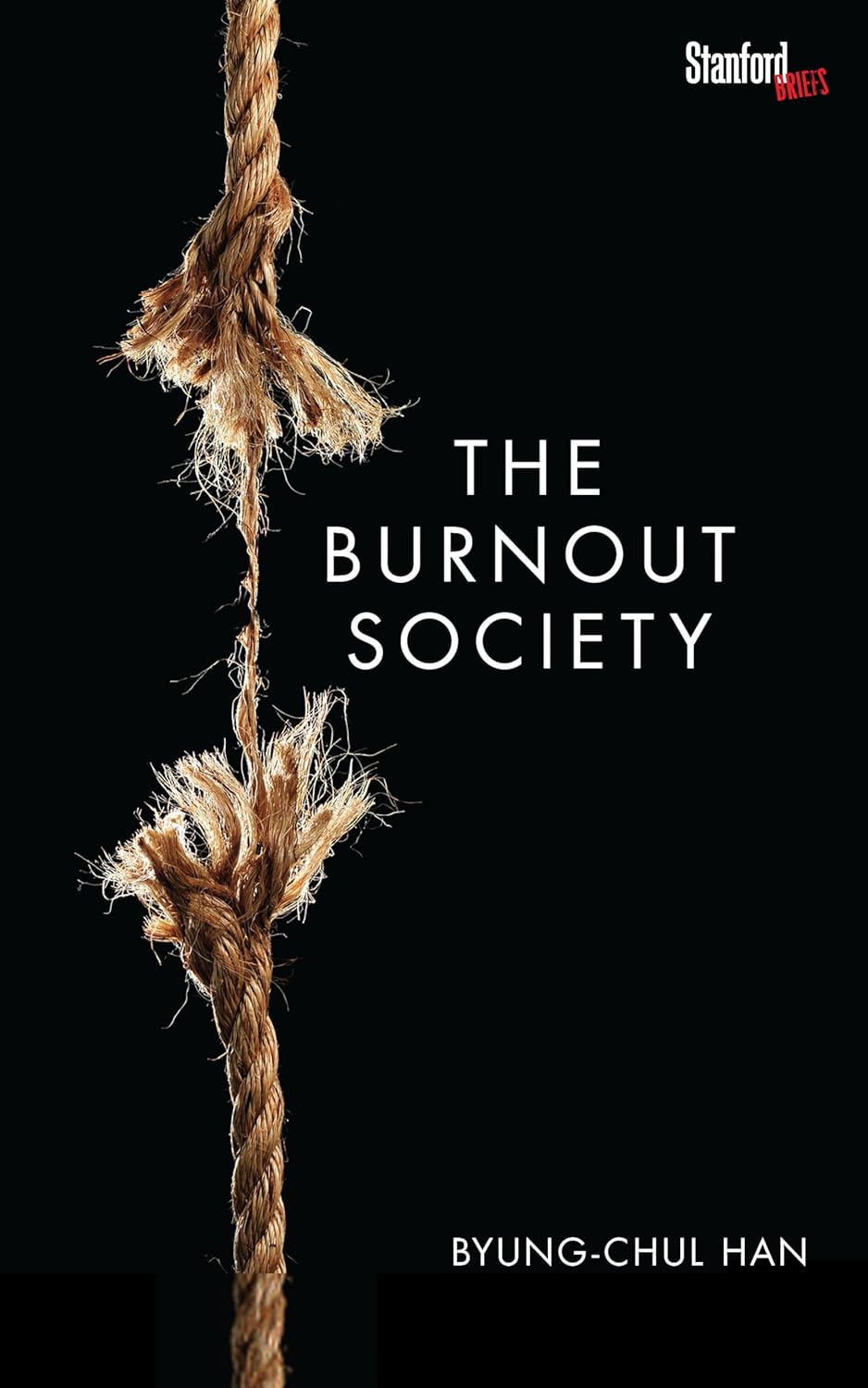
The first chapter of this month's book, The Burnout Society, addresses why we seek out distraction at the first sign of anything negative. Byung-Chul Han argues that in a world of hyper-positivity and on-demand gratification, even small discomforts drive us to distraction. Tech companies want our attention to sell it so they make it easy to find a random dopamine hit that keeps us coming back to self-soothe at the first sign of boredom.
This is why the moment a movie is not maximally engaging we grab phones and look for something to scroll. We're continually hoping that the next thing in our feed will be funny and give us that shot of "good" chemicals to soothe the momentary anxiousness we feel.
We avoid any type of boredom, because there must be something out there that will make us feel good right now, and tech companies engineer their platforms knowing this. They give us just enough positive reinforcement to keep us hoping that the next flick of a thumb will bring us a payoff.
Continuous Partial Attention
This emotional avoidance is further compounded by how we manage attention in the digital age. Linda Stone uses different language to describe multitasking. She refers to multitasking as motivated by a desire to be more efficient. We fold laundry and talk on the phone or listen to a podcast. We have one cognitively demanding task, and one automatic task. Because one task is automatic it doesn't affect the quality of the output for the demanding task. This type of multitasking she calls simple multitasking and in her words it creates more opportunity for us.
But what most companies call multitasking Stone says should be more correctly called continuous partial attention. This is marked by paying attention to your primary task, say writing this article, and at the same time you have some social media feed scrolling by. The writer hopes that some better opportunity comes along to distract them from the hard work of putting coherent words on the page.
Instead of struggling for those words, a quick reply on Mastodon that makes someone smile is a faster dopamine pay off so it increases the positivity of the writer.
At home, we're talking over the dinner table and still watching for text messages to see if what comes in on our device brings us more positive reinforcement than the conversation at hand.
Stone says the result of this continuous partial attention is that we're over stimulated. We thought we'd enjoy the conversation with a friend, but leave the experience as if something was lacking, because something was. If both of you were grabbing your phones during conversational low points, you never deeply engaged with the person sitting across the table from you. Those of us old enough to remember a time when the computer was shared and sat in a specific room in the house also remember fondly spending a night on the couch talking without distractions showing us that we're not stimulating enough for those around us. We miss not being important enough to get someones uninterrupted attention.
At work we suffer from the same issue that the students did in the first study I cited. We get our work done slower, we understand less of it, and it takes longer to do. Over the last 6 weeks I've been covering support while my coworker takes time off to be with his new babies2. That means the hard developer tasks I usually do simply aren't getting done, and I'm getting more and more frustrated with my job. Frustrated enough that I contemplate finding a new job, despite my current one paying very well and letting me do whatever I want as long as work gets done.
Knowing that I have to jump on support requests as soon as the come in, I'm loathe to even start on something hard because I don't know if I'll be able to complete an entire thought before I have to stop what I'm doing and tell a customer how to compress a PDF enough to upload it to our CMS. The thing I love most about being a developer is doing things. I love shipping solutions, and digging into hard problems until they're wrangled.
The most depressing part for me is that the world of work is handicapping itself be requiring so many workers to have company chat open all the time, or expecting that you'll answer emails within 20 minutes of them being sent. What they're really asking is that the people they pay to do work do less work, and do worse work.
PS
I'm racing Canadian Gravel Nationals (bike race) next weekend so there will be no book email. I'm just going to focus on doing well there.