Remember, this month I'm going to do some writing about the non-club books I read over the course of 2025, or at least some pieces that tie everything together between books. If you like this and want to keep the content coming become a member
The part of the writing process that gives me the most trouble is revision. I often find it hard to go back and look at my writing at all before I publish it. I'm done and want to move on to something else quickly. Sitting down and think about something I've written to see if it is coherent feels like doing the dishes, while writing something fresh feels like playing with a new toy.
To help that I've employed an editor at times, or used tools like Grammarly, and ChatGPT to show me spelling and grammar mistakes. But it also requires discipline to walk away for a few minutes before sitting back down and working through my writing to make my points clearer.
I've wondered sometimes if I don't want my fragile ego confronted with the truth that my initial thoughts aren't coherent enough. They don't have structure, or maybe they're just bad.
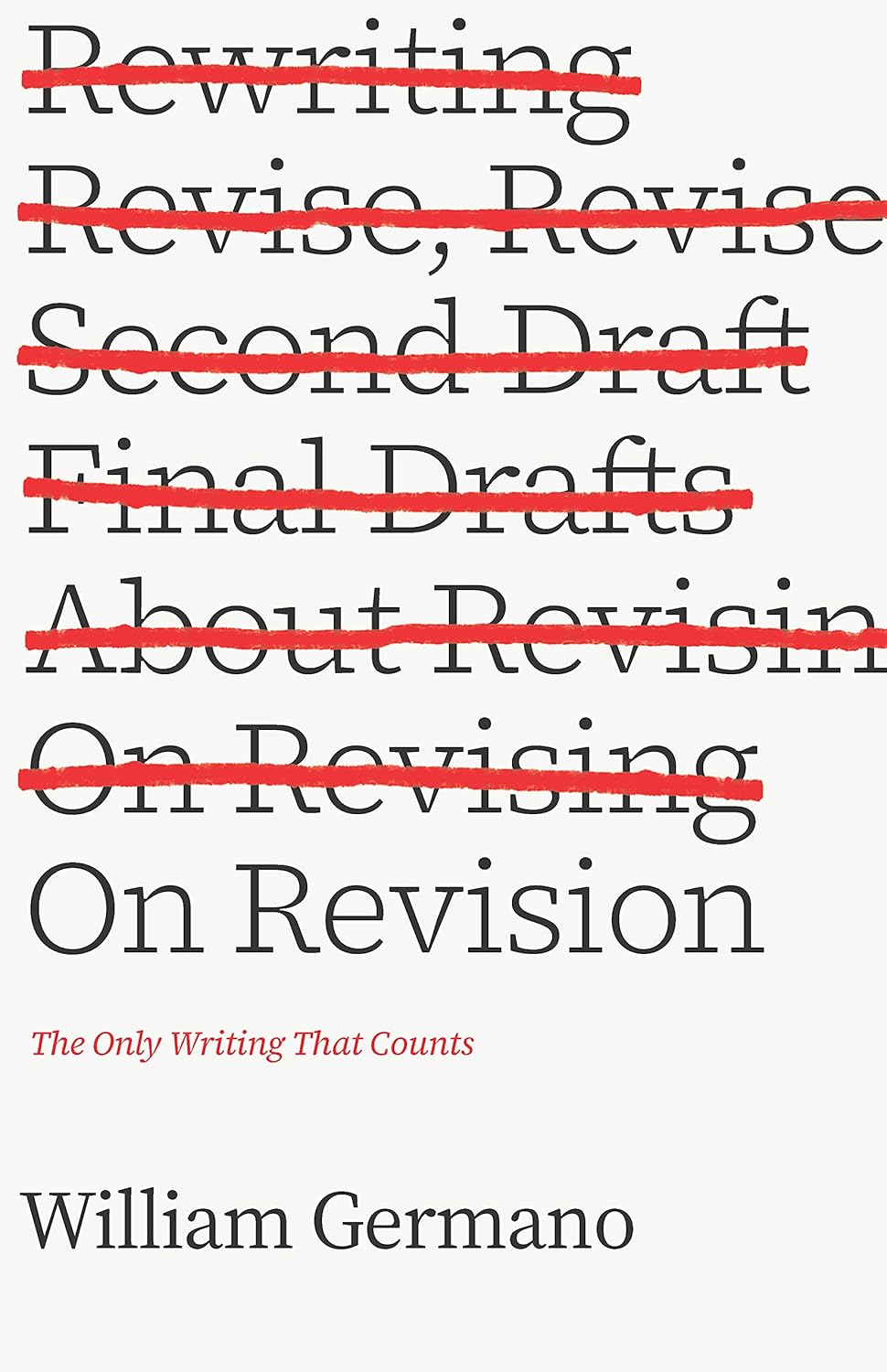
This is where William Germano, steps in to help us move past the simple step of checking spelling into a structural rethinking of our writing, which he defines as proper revision. On Revision is all about this deeper look that you should take at your writing and is geared specifically towards the academic writer looking to take their deep academic writing and turn it into something a bit more suitable for a wider audience.
Do it three times
There's an idea that floats around in my head about programming. What does it takes to write a good piece of software. First you write it to figure out what you're doing. Second you write it better, because you now understand the problem properly. Finally, you write it a third time because you now understand the pitfalls that were lurking in your understanding.
Germano's book sits directly in this principle, revising your writing is all about getting the first draft out so you know what you're thinking about. The second draft is done because you know what you think, but your structure was scattered and with the understanding gained in your first draft you can now write something good. Finally you write it again because you see all the holes in your thinking, where people will pick apart your arguments. Now you can flesh those holes out to have great writing.
He says that revision is not about fixing errors in spelling and grammar, but understanding what you're saying now that it's on paper1 so you can build strong supports for them. It's about finding the ideas that fizzle out because they're not interesting enough for sustained focus. Where your writing starts to meander because you were bored part way through.
Maybe the idea was weak2 from the beginning and you put it in because you did some research you can't bear to throw away. Like art, good writing is done when you can't take anything else away and still have the writing maintain its current function3.
To embark on the journey of revision you need to understand what good writing looks like?
What is good writing?
That is a perennial question, what makes writing good? Why does some writing stick, and other similar writing on the same topic disappears into obscurity?
One of the key hallmarks of good writing is that it's persuasive4. It doesn't merely tell you about something, it draws you into the narrative and forces you to think about the problem the writer is tackling, maybe even think about it in a new way.
Good writing moves past mere bulk and fancy words as markers of authority5 and turns into something that makes the reader pause to examine the problem on their own now that they have new information.
A well-written piece like The Other Side is Not Dumb persuades. I had never thought about the "other side" in an argument and that they might be just as confident in their beliefs as I was. Clearly I had the superior ideas and my logic would bring others to my side. If you missed my logic, you must be dumb.
It couldn't be me, and maybe I need to say the same thing louder.
When someone knows the least about their topic they easily fall into the loud and brash style of argument6 as if that lends them authority. While loud may be needed in a certain section of your writing, it shouldn't be the core of your authority or you've got some bad writing on your hands. Quiet subtle persuasion, is a hallmark of good writing.
Good writing is published, not sitting on your screen waiting for someone to read7. If you haven't taken your writing to the final form and let readers get involved, then you really haven't done anything. It's easy to keep your writing to yourself though because if you haven't published it then it can still be an award-winning piece that everyone will fawn over. It can live in your mind as a mythical perfect piece of writing and your ego won't have to face the truth of public indifference.
If you can avoid meeting the reality of getting lost in the noise, you can keep your ego intact and continue to think that your writing is going to change the world.
Should You Read On Revision by William Germano?
If you want to be a writer, yes you should read it. It's got some great exercises to walk through and questions to ask about your writing that will help you think through your arguments and your structure so that you can improve your writing and make a difference in the lives of readers.
If you're not aiming to be a writer then this likely isn't the book you're looking for.
-
Purchase on Bookshop.org – support local bookstores