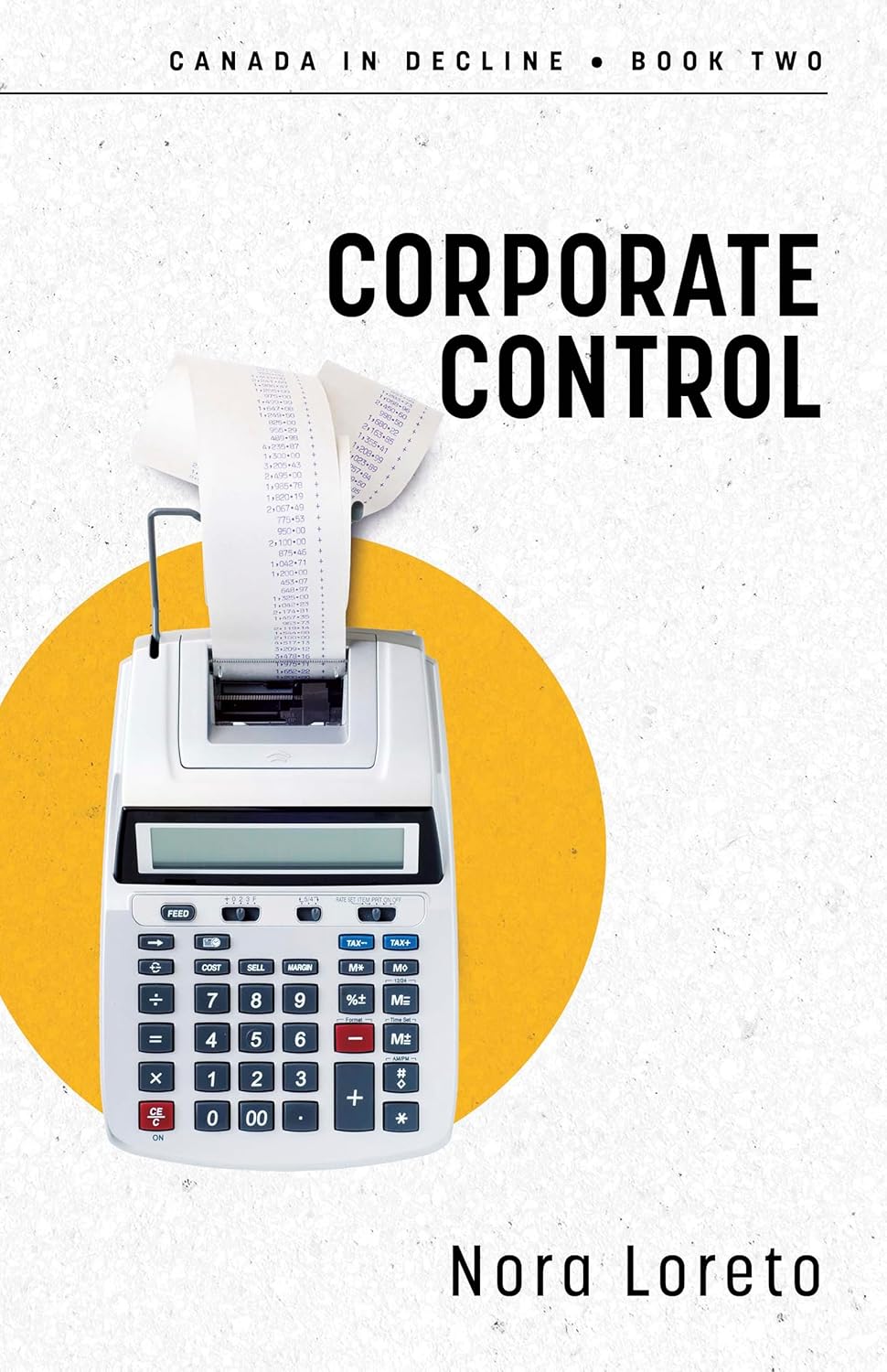
Much like Dark PR I see in this government subsidizing industries that really aren't good for the people that live in the country, the people that government is supposed to be serving. From choosing free trade over the protected economy in the late 80's to selling off the Crown Corporations to business that now make billions in profit, to return small millions in taxes, this book presents a strong case that neoliberal economics has failed the people and enriched the already rich. I've purchased Loreto's other book The Social Safety Net and look forward to reading it. If one can look forward to reading about how the social institutions of their country are being decimated for profit.
- [[Trends in Income Inequality in Canada and Elsewhere - Andrew Heisz]] - Pg 2
- source: https://irpp.org/wp-content/uploads/2016/01/aots5-heisz.pdf
> How desperate should a worker be for a job, so that corporations can keep wages low and benefits non-existent? Should corporations be allowed to make as much profit as possible? Pg 3
- looks at how [[neoliberalism]] has given corporate leaders direct access to politicians which lets them shape laws, policy, and the enforcement of those laws on the companies they run. This control of government allows them to make maximum profits. Pg 3, 4
- [[Challenges and Perils - William K Carrol]] - Pg 9
- looks at how neoliberalism came to be the defacto ideas in Canadian politics
### 1 - Business as Colonization
- Canada's economy was built on the perception that it was a vast unowned empty land ripe for the taking. Pg 20
- this of course negates the [[first nations]] claims on the land who were discounted because they didn't choose to use the land as [[European]] settlers thought they should
- [[The Wretched of the Earth - Frantz Fanon]] Pg 21
- interrogates race, colonialism and the psychological trauma
- tremendous wealth has been generated on lands taken from [[first nations|first nation]] so that white settlers have been enriched and [[first nations]] have been left with the legacy of [[poverty]] and social issues. Pg 23, 24
> [[colonialism]] is the engine of Canadian [[capitalist|capitalism]], and the need for corporations to make money and have access to resources has operated hand in glove with governments approaches to [[first nations|indigenous]] people. Pg 24
- [[Canadian Capitalism - Jorge Niosi]] - Pg 25, 26
- a look in 1981 at how big the corporations had grown in Canada and their outsized influence on politics
- the [[MacDonald Commission]] recommended [[free trade]] which set Canada on a path to change from a protected economy to one of [[resource extraction]]. One where the government had little influence on the shape of the economy as they ceded everything to the market, which if we believe [[neoliberalism|neoliberal]] thought will always do the optimal thing. Pg 41
### 2 - The Free Trade Revolution
- we say we love Canada but do little to make sure our industry stays owned by Canadians. Pg 44
- [[Zellers]] is gone, [[Tim Hortons]] is owned by a Brazilian [[hedge funds]]
- [[Take Back the Nation - Bruce Campbell and Maude Barlow]] Pg 44, 45
- [[NAFTA]] decimated manufacturing in Canada so that now we rely on other countries for finished goods. Pg 54
- [[COVID 19|COVID]] and the current issues with the [[United States]] bring our reliance on others for finished goods to the forefront as well
> [[capitalist|capitalism]] rewards [[innovation]] through higher profits and if government needs to intervene to keep a company afloat well that company simply should not exist, if we follow market logic. Pg 55
- so goes the [[free trade]] booster argument.
- but then look at all the companies that got bailed out during [[COVID 19|COVID]] like the [[automotive industry]]
- [[GST]] is a regressive tax, everyone pays the same rate regardless of ability to pay with lower-income people paying a higher percentage of total income into GST. Pg 61
- it's a tax on average people letting the rich off
> Starting with [[Brian Mulroney|Mulroney]], the gospel of [[neoliberalism]] has been passed down from prime minister to prime minister ever since. Pg 68
- [[Brian Mulroney]] was first a leader to benefit businesses, which is where he went after his political career.
- [[neoliberalism]] open the Canadian economy for wild corporate profits while worker wages have remained more or less stable. Pg 72
- [[Brian Mulroney|Mulroney]] is who started this
- a key to [[neoliberalism|neoliberal]] economics is destroying the average person's ability to organize. Either make sure they have to carry so much debt, or work so many hours or have forced unpaid labour at home due to lack of a social safety net that they're in the [[scarcity trap]] and can't put effort into fighting. Pg 72
- we argue that opening [[free trade]] in Canada will force Canadian businesses to be more innovative and productive, but the numbers since [[NAFTA]] don't prove that claim to be true. Pg 78
> By handing over the reins of the market to the market itself, Canada's government has outsourced governance. Pg 84
- they have little influence because they don't have access to any parts of the market that can affect the rest of the players. We used to in the form of [[Crown Corporations]] but we broke them up and sold them off.
### 4 - The Rise and Fall of Crowns
- selling [[Crown Corporations]] built the [[oligarchs]] we have in business today. They run our lives without being elected and without giving citizens any real way to vote. Pg 88
- sure we can [[vote with your wallet]] but when the only option for groceries is owned by one or the other oligarch, how is that a choice?
- the profit motive that drives companies is not sufficient to meet the needs of a Nation. Pg 91
- they won't invest in some things even if they are best for the nation because they're interested only in profits and that can be at the expense of the nation if that's how it has to be.
- [[Whence They Came - Barbara Roberts]] Pg 92
- a look at how immigration and deportation was used in Canada to keep out those the government didn't like
- Canadians are taught that government is inefficient and needs to stay out of the way of business. But to make [[WWII]] economics work [[Crown Corporations]] were built because they could be fast and nimble to the government and the country's needs. Pg 99
- [[CN Rail]] was privatized and in 2023 made $16.8 billion in profit while paying $863 million in taxes. How do we argue that Canada is a better place with us giving up the railway taxpayers paid to build so that a few people could reap that profit while the public has to struggle along with the small bit of taxes. Pg 114
### 5 - The Financialization of Health, Education, and Housing
- 96% of Canada's population growth is due to [[immigrants|immigration]] and [[refugees]] with no plan to house or ensure healthcare can keep up with demand. Pg 114
- there is no money to be made from poor parents with sick kids or homeless with mental health issues yet we continue to privatize parts of healthcare. Private companies are looking for profits though and cutting these non-profit services is an idea they'll look to. Pg 117
> Market logic, when placed upon public services, argues that doing more with less is optimal. Pg 120
- see [[Against Creativity - Oli Mould]] for more on this
- ![[Against Creativity - Oli Mould#^77628d]]
- we apply [[Lean Management]] principles to healthcare when the issue is lack of funding and staff. We can't manage our way out of this. Money needs to be spent. Pg 122, 123
- Lean is about cutting slack so a system is financially efficient, read profitable. But this means that it can't handle any shocks to the system and has no extra capacity. Pg 124
- [[Saskatchewan]] lean healthcare work cost $1512 for every dollar it saved. It decreased morale and did not improve patient outcomes. Pg 125
- housing is no longer merely a place to live, it's become an investment vehicle. People plan on selling their house to afford retirement. Pg 136
- this means we can't treat housing as a fundamental right, because it needs to make people money.
### 6 - Profits Bonanza
- in 2023 [[Suncor]] saw record profits of $13 billion while the most populous city in [[Alberta]] hands out more emergency food and dealt with a growing drug epidemic. The public paid to build the infrastructure that Suncor uses, but doesn't see much of the benefits. Instead the benefits go to Suncor. Pg 143
- staple based economies are subject to boom and bust cycles as fisheries collapse or the fur trade does. Pg 145
- or as oil prices collapse
- the government own roads, why doesn't it own our Internet infrastructure and cellular infrastructure then lease it back to companies or just give us cheap government run services? Or, use the profits earned for public service and support projects. Pg 152
- interest rate hikes take money from the poor, more likely to have debt accruing interest, and gives it to the wealthy, more likely to have investments earning interest. Pg 154, 155
- [[Neoliberalism Inequality Austerity in Rich World Democracies - John Peters]] Pg 157
- source: https://www.researchgate.net/profile/John-Peters-2/publication/264897450_Neoliberalism_Inequality_and_Austerity_in_Rich_World_Democracies/links/54e4a9350cf29865c334c04d/Neoliberalism-Inequality-and-Austerity-in-Rich-World-Democracies.pdf?origin=publication_detail&_tp=eyJjb250ZXh0Ijp7ImZpcnN0UGFnZSI6InB1YmxpY2F0aW9uIiwicGFnZSI6InB1YmxpY2F0aW9uRG93bmxvYWQiLCJwcmV2aW91c1BhZ2UiOiJwdWJsaWNhdGlvbiIsInBvc2l0aW9uIjoiZ2xvYmFsRm9vdGVyIn19
- low interest rates hide stagnant wages by making it cheaper for people to borrow on purchases that previous generations could simply afford without debt. Pg 157
- the top 5 non-financial industries in Canada saw a 185.5% profit increase from 2017-2022. Wages of course did not increase by anywhere near that amount which means, the depression of wages paid for that profit. Pg 161
### 7 - Corporate Influence over Political Power
- the [[Canada|Canadian]] government is handing $39 billion in subsidies to auto companies so they build [[EV]] infrastructure in Canada. These companies have a combined profit north of $70 billion why are we giving them any public money? Pg 175
- why aren't they contributing to Canada's social supports so they are allowed to do business in the country
- how about a [[Crown Corporations]] to reap some of these profits? Or sending that money to the Canadian research institutions that have done so much battery research that companies then get to profit off of?
- when the government will give you subsidies to invest you do nothing until the subsidy (bribe) is offered. Maybe you complain about the costs of making any investment to help spur the subsidy along. Pg 178
- [[trickle down economics]] doesn't work. See [The World Inequality report of 2022](https://wir2022.wid.world/) showing wealth increase at the top with no trickle to speak of. Pg 181
- Canadian politicians spend their days rubbing shoulders with business elites and cycle between politics and high paid business. No wonder they protect the profits of their friends, the parents of their children's friends. Pg 188, 189
### Conclusion
- we won't increase the death benefit so people can afford to claim the bodies of their loved ones and bury them but we will build freezers to house the bodies that are unclaimed at a great cost, and private contract profit. Pg 198
- [[Work Won't Love You Back - Sarah Jaffe]]
- [[Lament for a Nation - George Grant George Parkin Grant Andrew Potter]]