It was a big month of reading with 5 non-fiction books and 6 fiction reads. The fiction was all great, the non-fiction had some duds though.
If you're into books join the book club to get weekly posts about books.
Fiction
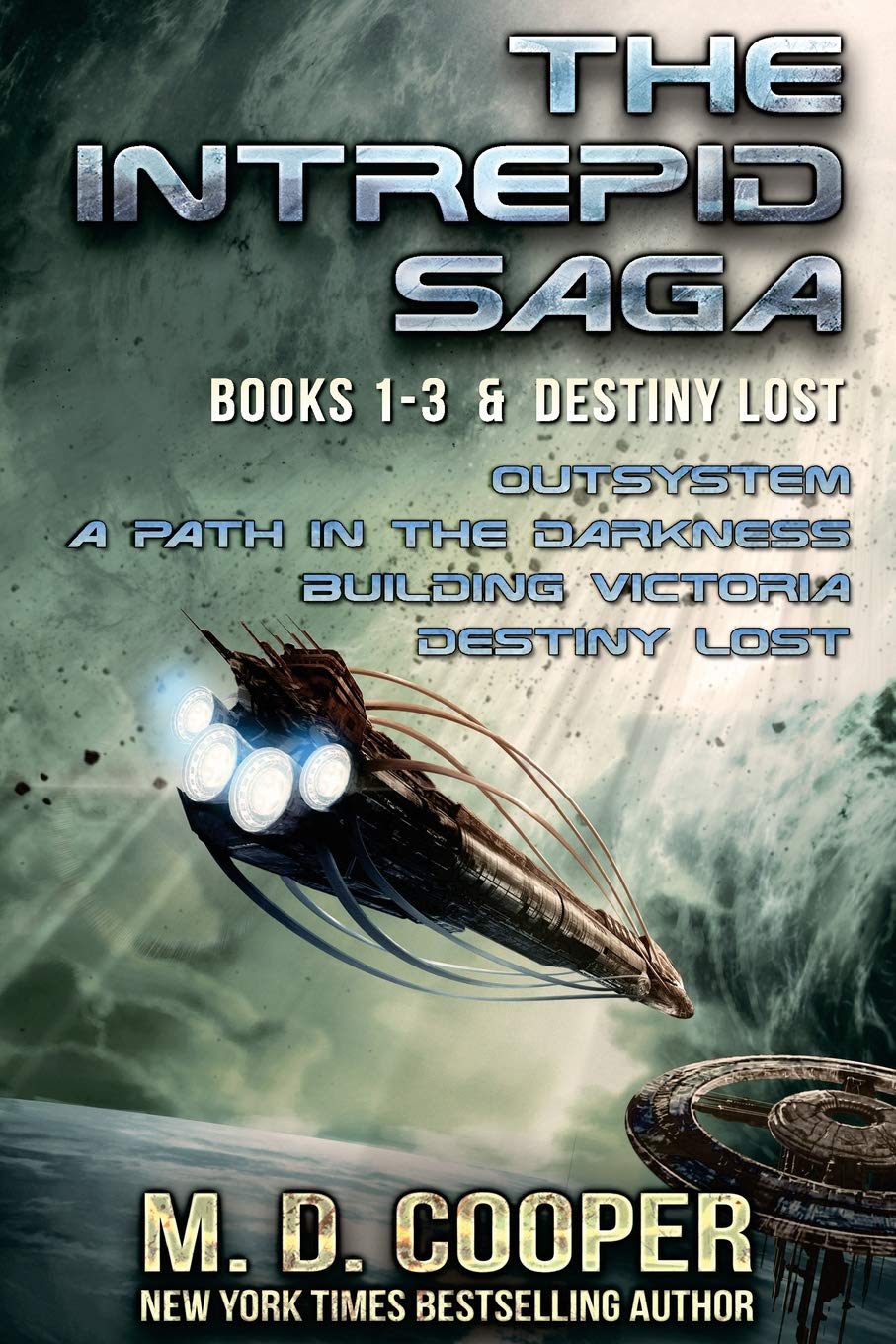
Destiny Lost - M.D. Cooper
Last month I read three books from the Intrepid Saga all of which were good but suffered a bit from weak dialogue sometimes. After reading those three books I was unsure if I'd be interested in further books in the series after I finished the omnibus edition, but I have to say that the final book in my omnibus has me wanting more.
Destiny Lost finds the crew of the Intrepid cast across the system, and forward in time by thousands of years due to a commonly understood (now) stellar anomaly. They've lost the planet, New Eden, they planned to colonise, but they also have technology not seen in thousands of years.
They encounter pirates, torture, and military's of the new world that want their superior technology. The Intrepid doesn't have all the best technology though, gravity drives and FTL have been invented and they need that to succeed.
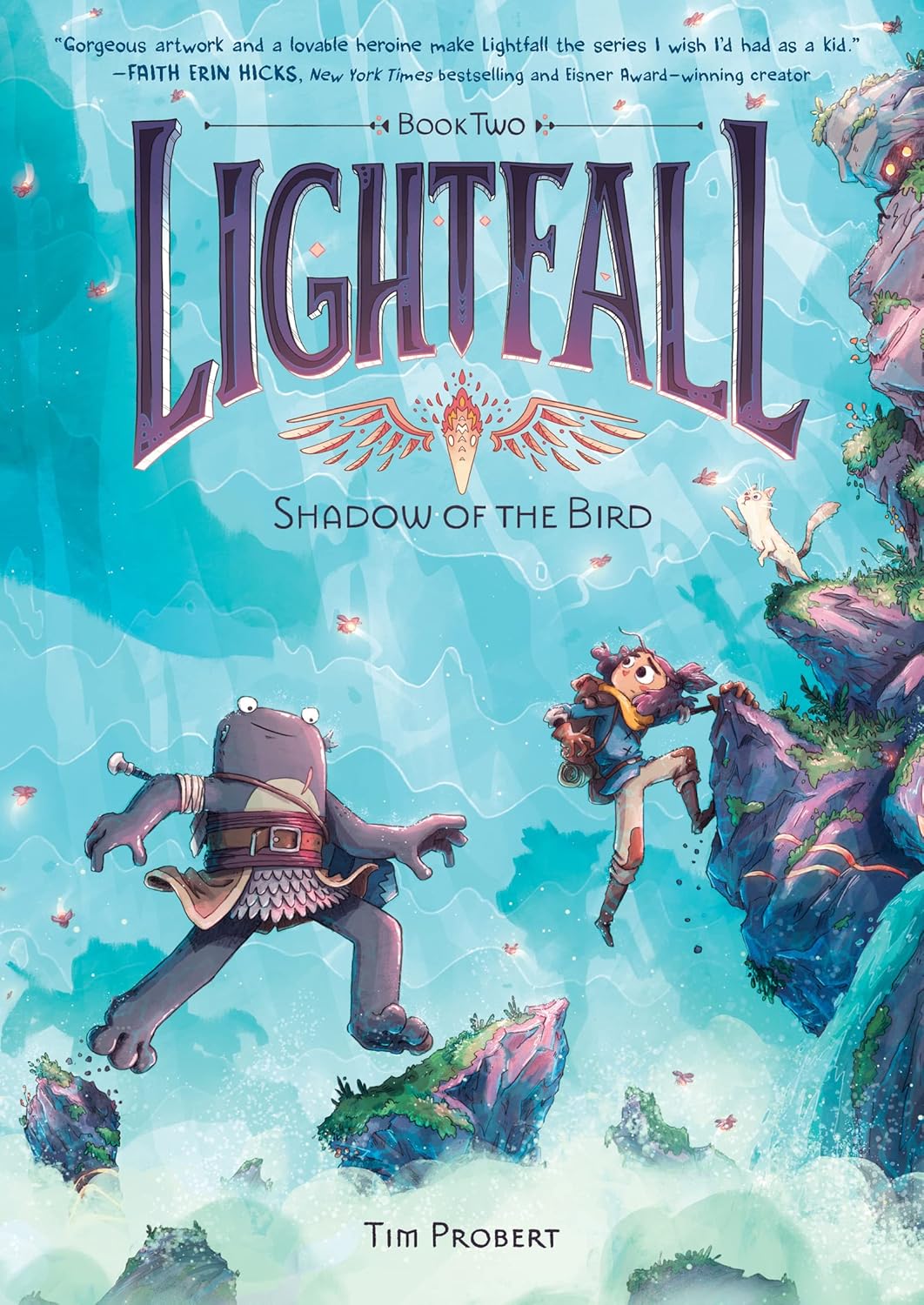
Lightfall Shadow of the Bird - Tim Probert
This is the second book in the Lightfall series, I read the first a few months ago. This time we follow Bea and Cad as they try to find a way to defeat Kest so they can stop it from stealing all the lights of the world.
I love the art in these books, and they deal nicely with depression/anxiety via the art as Bea battles her own inner demons. It has prompted a few decent discussions about emotional issues as my children have read it.
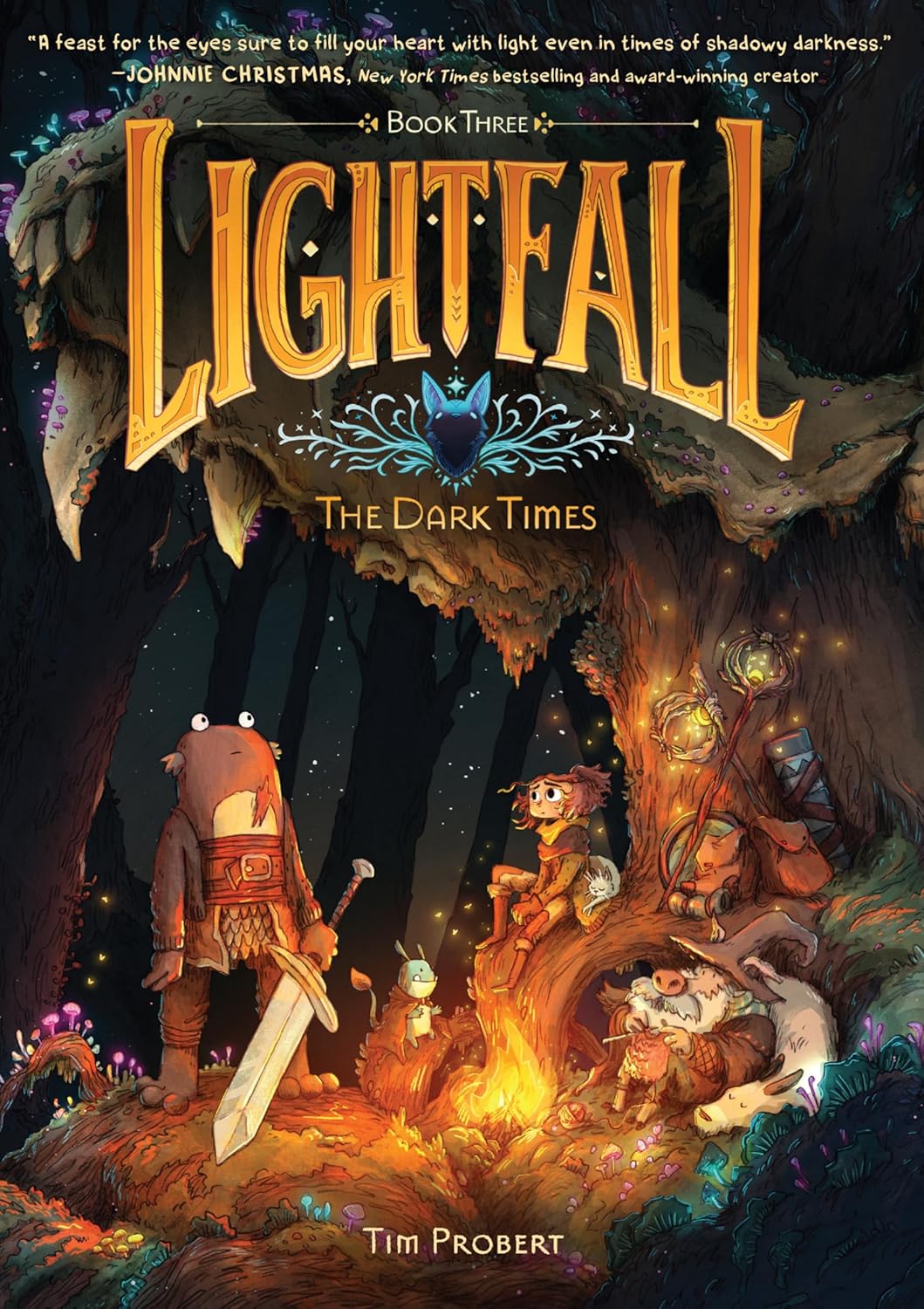
Lightfall The Dark Times - Tim Probert
The third instalment of the Lightfall series deals with the aftermath of the killing of Kest, who happened to be the source of all light. We're now in the dark times and heading on a journey to find the sun based on same old writings that The Pig Wizard, Bea's grandfather, is able to translate after a visit to a library.
We also get to learn about the creation of Irpa by Kest, Lorgon, and the other spirits of the world who have withdrawn.
Again, the art is excellent.
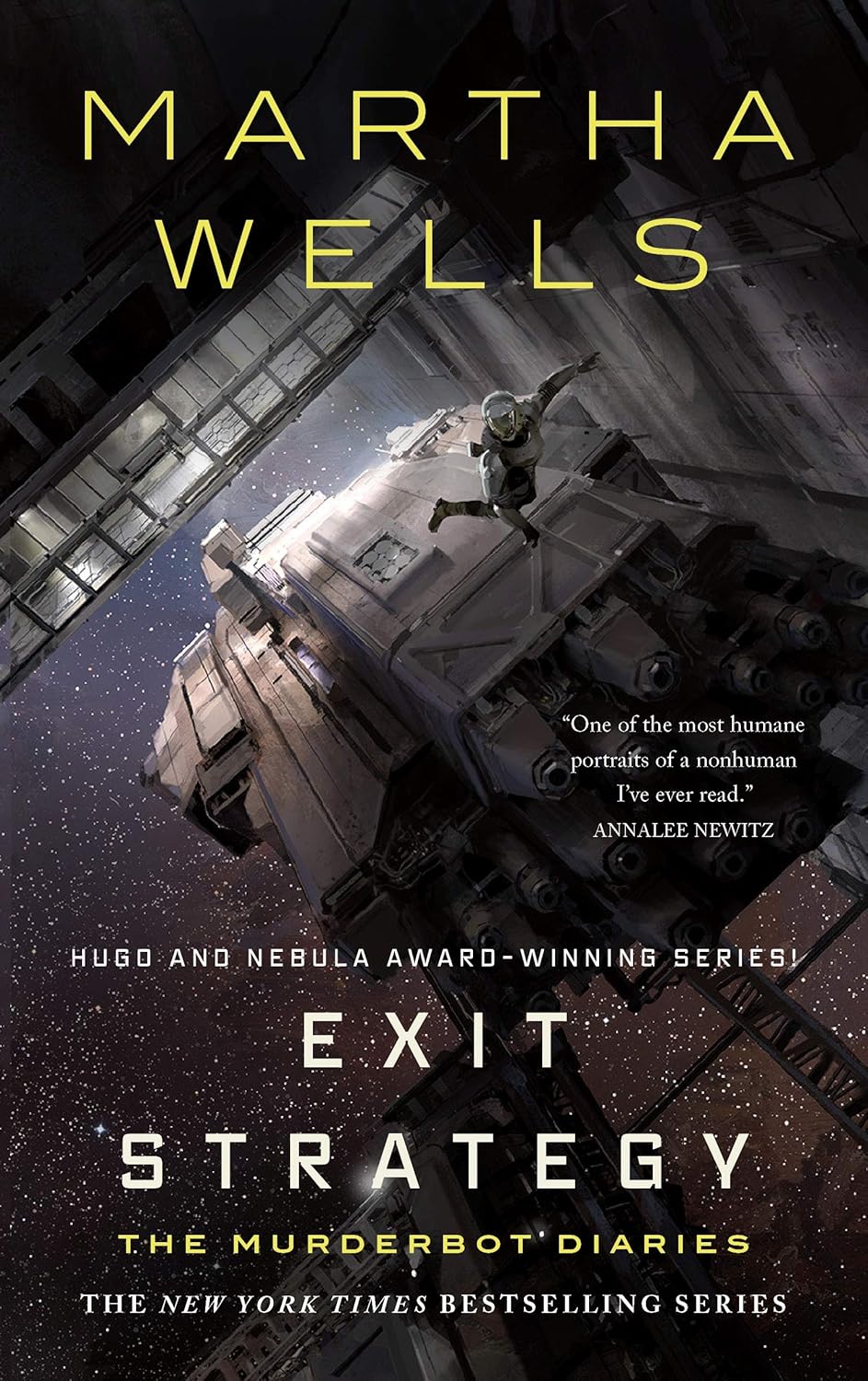
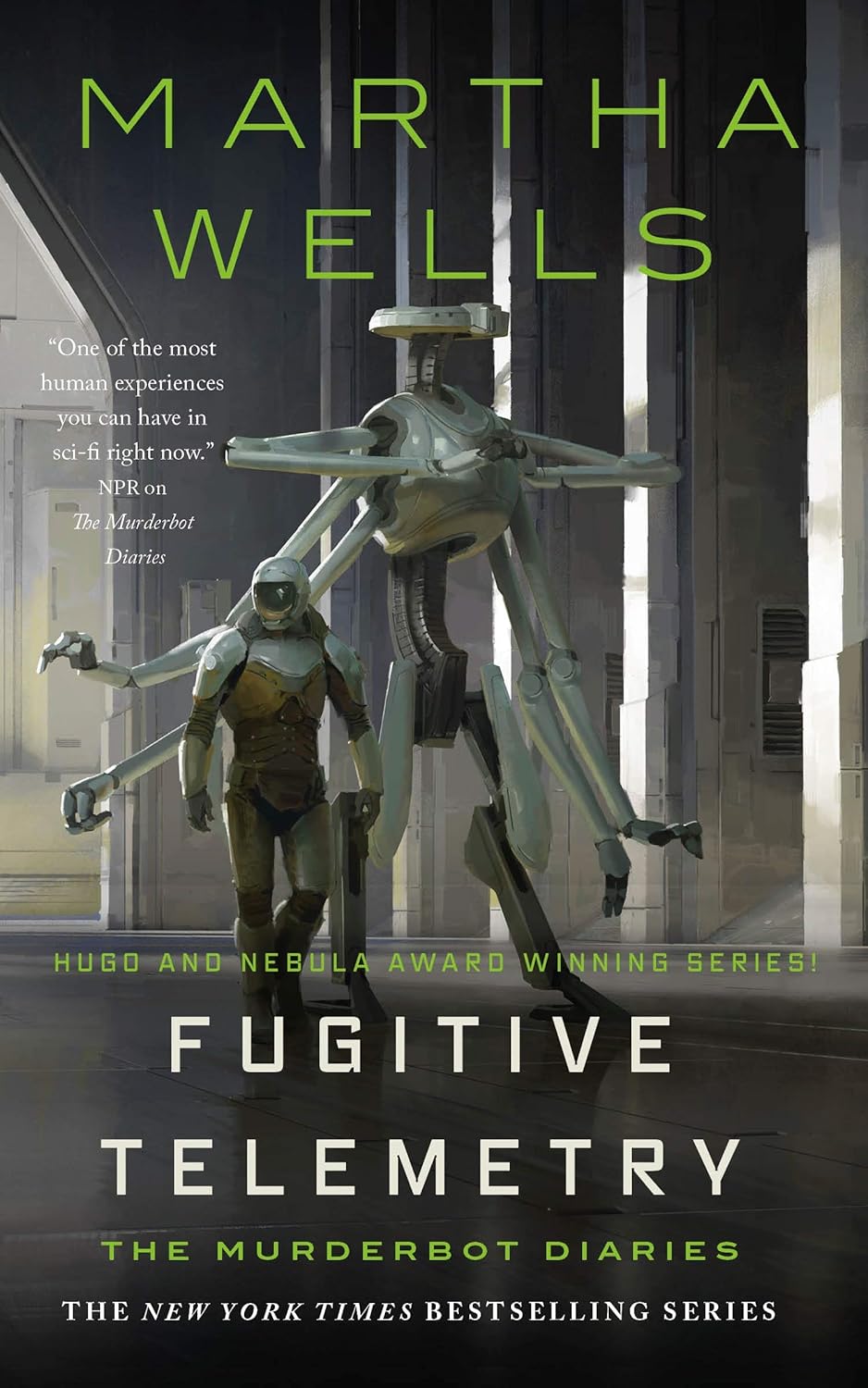
Exit Strategy - Martha Wells
This one made me cry at the ending as Muderbot rebuilds its memory and grapples with human emotions, and the true freedom it's friends give it, because they recognise it as a fully sentient being that happens to be partially robotic.
Probably the most human set of experiences I've read in fiction.
Murderbot finds out it's friends are in trouble. Mensa is caught by GrayCris, and it sets out to help. Of course mayhem ensues, but that last chapter hits you hard in the gut with emotion.
Highly recommended.
Fugitive Telemetry - Martha Wells
Taking place just after Exit Strategy, we meet Murderbot trying to live within the bounds of the Preservation space station security where it is making it's home currently. Preservation is a place where any murder is odd, so when one comes up Murderbot is reluctantly accepted as a consultant to help out station security.
Muderbot takes the direct route as usual, though it has to be a bit more careful because of the promises it made to station security about not hacking their systems. Still, Murderbot doesn't waffle around, it just goes out and collects information to solve the murder, and find humans being smuggled away from slavery before they die.
What continues to fascinate me about these quick stories is the humanity seen in all of the bots we meet. From the "dumbest" haulers, to the most sophisticated bots like Murderbot, there is a real personality behind the bot that humans never get to see.
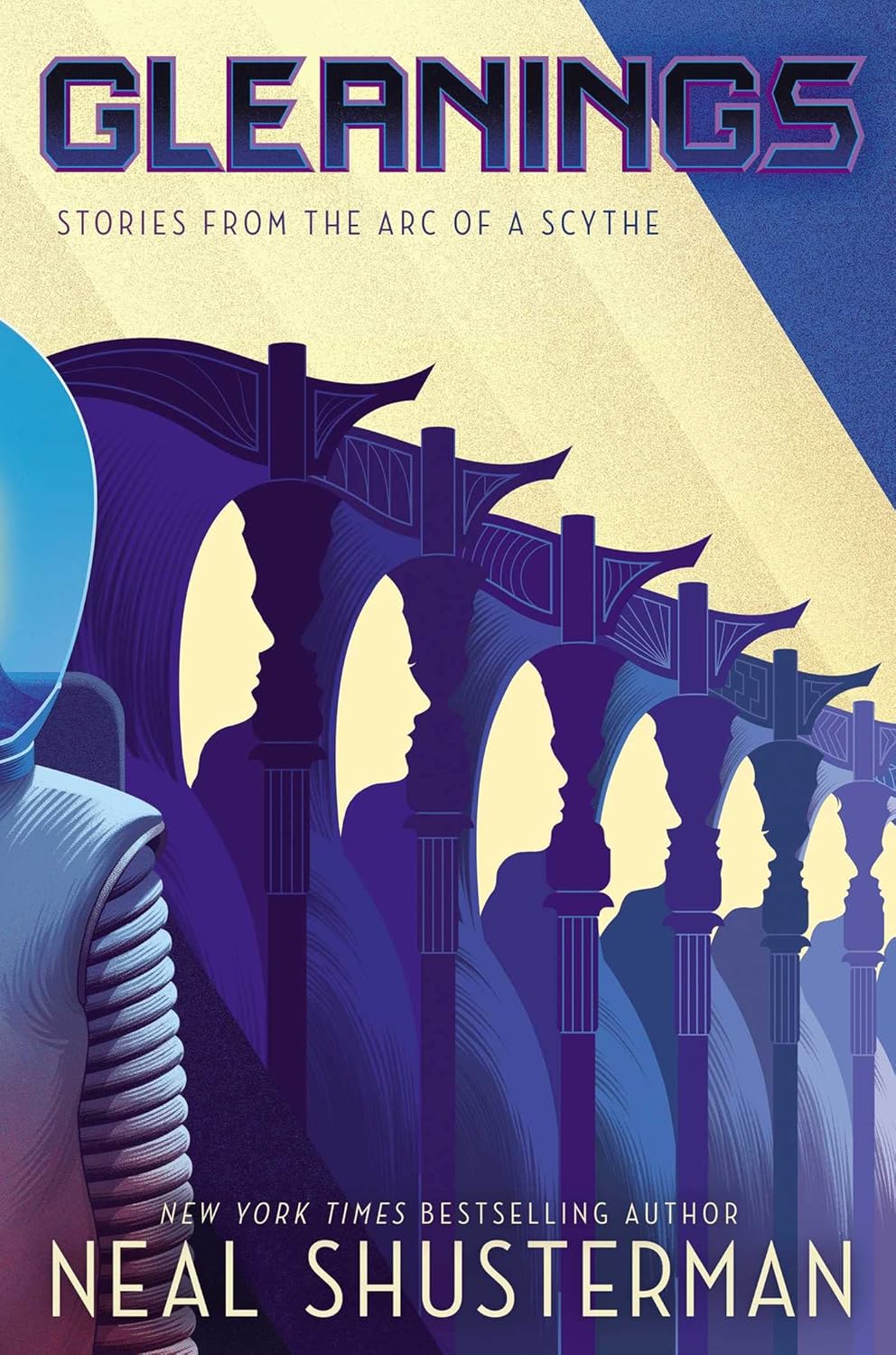
Gleanings - Neal Shusterman
This is a series of short stories written by Neal Shusterman and others in the Scythe universe. We get to meet some familiar faces, and some unfamiliar faces as we get a better look at the whole world that the Thunderhead has built.
I enjoyed all the stories, and enjoyed the insights into parts of the world that were referenced in the original series, without being expanded on. We get to see why the Mars colony didn't work, it was the fault of Scythe's not the Thunderhead's lack of ability to manage the colony as we're told elsewhere. We see the creation of Scythe Goddard and the future of Scythe Marie Currie.
It's going on my shelf for a future reread.
Non-Fiction
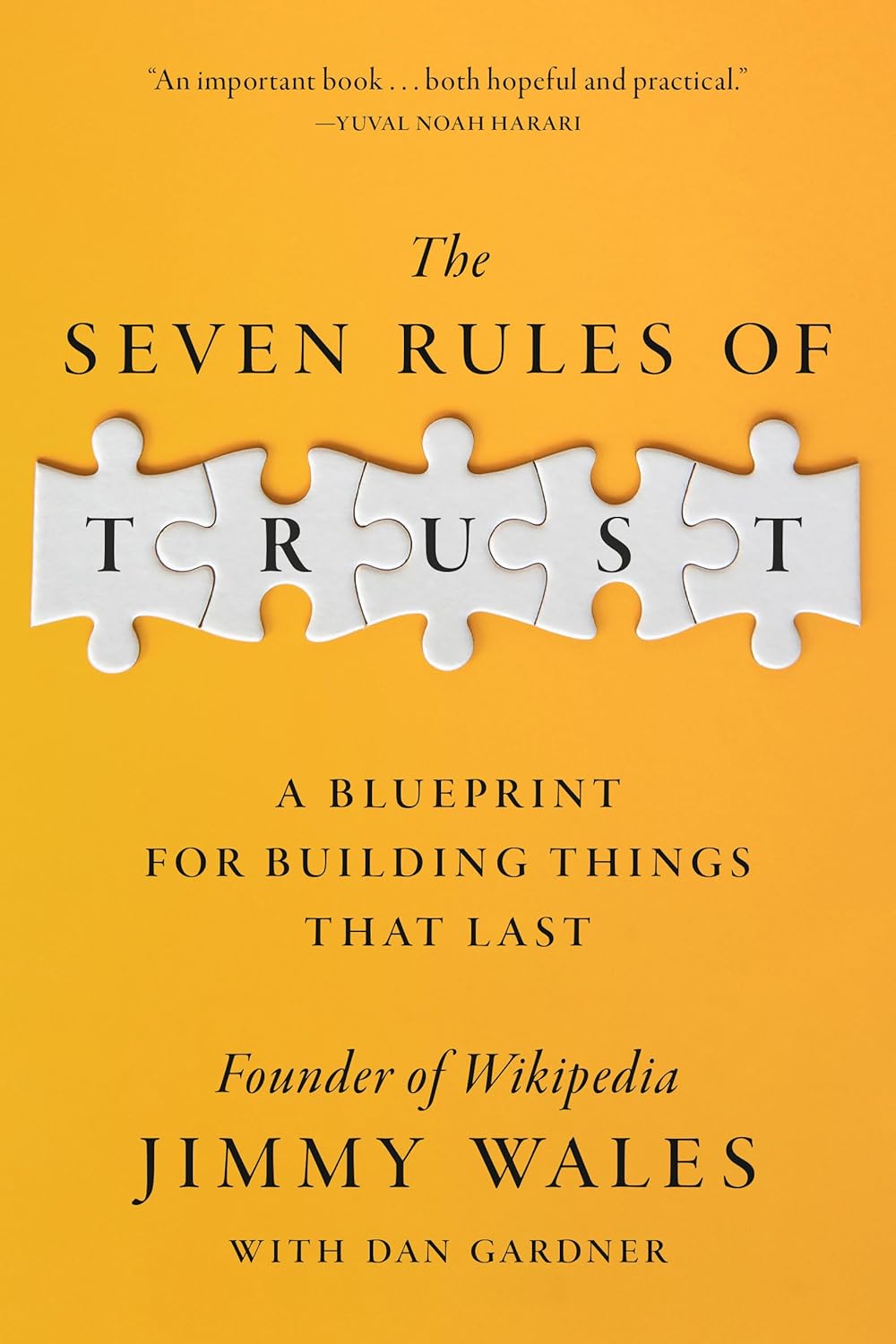
The Seven Rules of Trust - Jimmy Wales
This was our book club book for March. Join it for free to see all the content we discussed.
While Wales starts the book by making a category error to prove his point, he still has a bunch of good stuff to say about building an organisation that is trustworthy. Stay on mission, do what you say you'll do, state your purpose and make it clear, give people autonomy to do their work.
Still every time he had good points, I would think back to his Silicon Valley/Big Tech mistake and wonder if I was missing something amongst his good points.
Should you read it, yeah it's a good quick read. Just don't fall for the claim that Uber was profitable because it wasn't and it had nothing to do with trust.
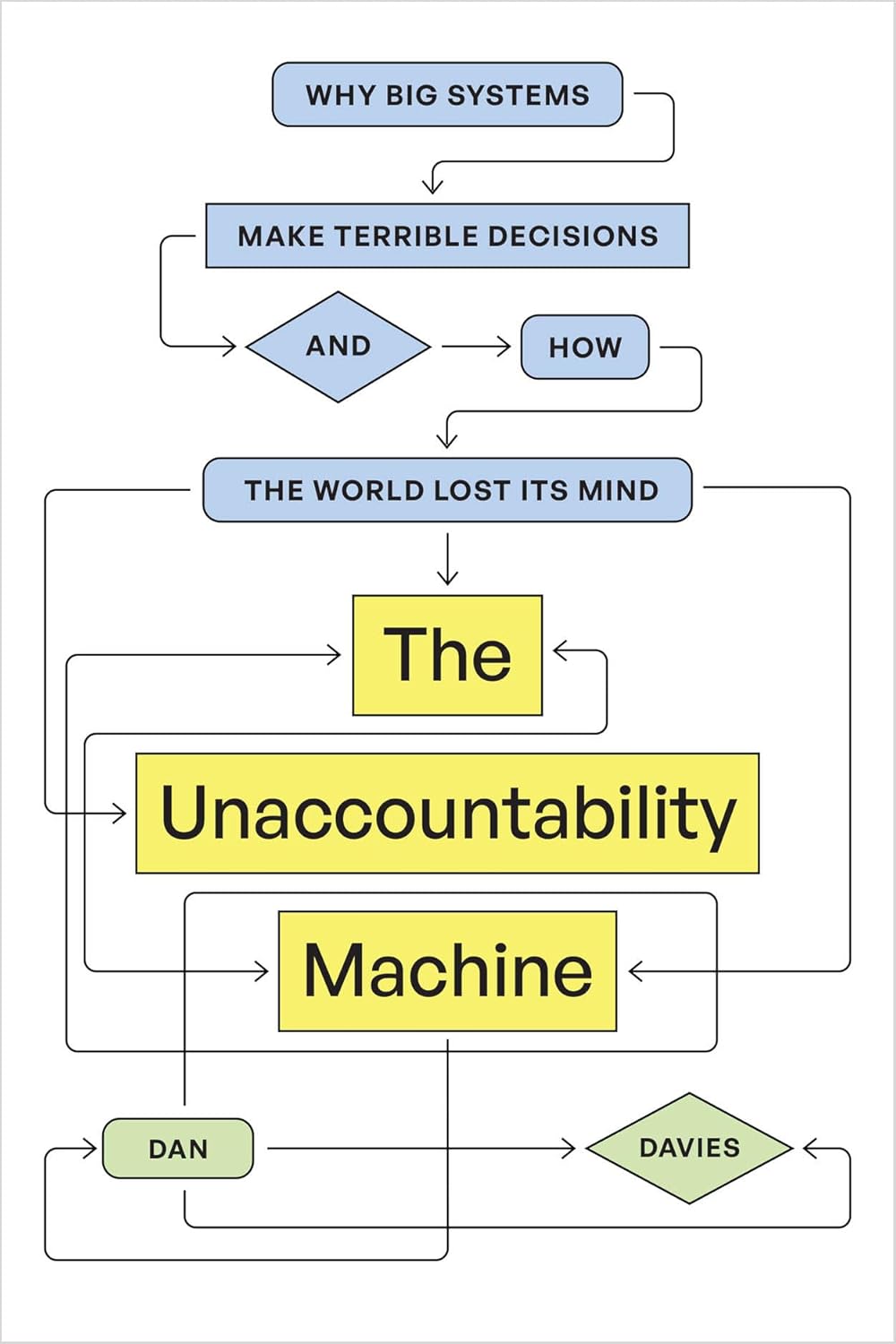
The Unaccountability Machine - Dan Davies
Dan's main premise is that many of our organisations are so complex that no one feels responsibility for any of the actions of the organisation which makes it easy for any level of management to push off responsibility for the results of the organisation. He calls many of these processes that push responsibility away from decision makers accountability sinks.
An accountability sink is when you have a front-line worker that has to enforce a policy that they can't change, nor can the end users affected by the policy affect any change. The only way to affect change is to communicate with someone further up the chain, who isn't available and thus never has to experience the results of the policies they put in place.
While he mentions AI and algorithms and makes a small connection between them, I don't think he takes it far enough as companies now roll out either of those options, and then absolve any consequences to the unknowable black box of AI tools. When algorithms can't be accountable, why should we let them make decisions. IBM is famously claimed to have warned against this future in 1979 saying:
“A COMPUTER CAN NEVER BE HELD ACCOUNTABLE
THEREFORE A COMPUTER MUST NEVER MAKE A MANAGEMENT DECISION.”
I think we should likely hold the designers and companies accountable for the output of their AI and algorithms and not let them point to the black box as a way of running away from the results of their choices in designing a tool.
Overall, good book, though I admit that much of the conversations on cybernetics and the ideas of Stafford Beer took some intense focus to get through. I loved the idea of accountability sinks and couldn't help but continue to find areas where they were applicable.
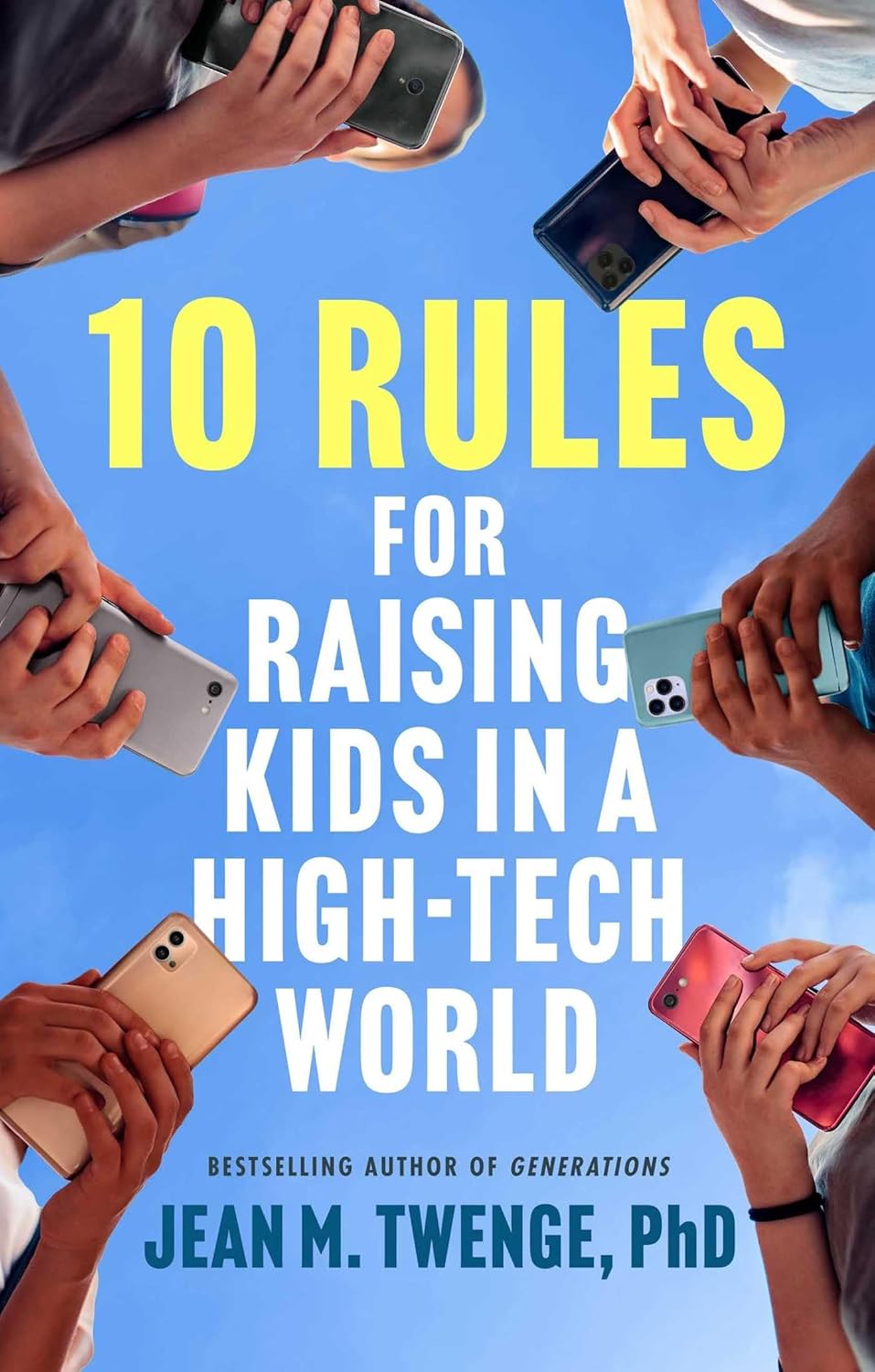
10 Rules for Raising Kids in a High-Tech World - Jean M Twenge
I previously read iGen by the same author, and found the book excellent, though when I put a hold on this at the library I didn't realise the connection. In 10 Rules for Raising Kids in a High-Tech World, Twenge picks up on many of the issues that later Millennials and the following generations have had in dealing with devices. Her antidote to that is these 10 rules.
They can be summed up fairly shortly. First, you're the parent, enforce the rules for devices and don't let the kid whining win you over. You don't let them smoke or drink because it's bad for them and you know it.
Second, we vastly over estimate the dangers in the real world and underestimate the dangers of the online world. Don't do that. Make sure they have dumber devices, delayed as long as possible, and make them get off their devices to go outside and touch grass. Give them freedom without monitoring, just like you grew up with.
For me this is fairly close to what we live. My 9 and 12 year old go to the store unsupervised. They go to the park, and have told noisy adults that they're old enough to know that they're allowed at the park without supervision so leave them alone. They probably don't have quite as much freedom as I did in the 80's, but it's pretty close. I often only have a vague idea of where they are in the neighbourhood and just trust they'll come home in time for dinner or go to bed without it.
I'd like to think that Twenge would be happy with this, while also wishing I had kept those same kids from having their own tablets years ago. I'd have to agree on that front, with "can I have my screentime" being one of my most hated questions because it's the first one I'm confronted with many days of the week.
I don't think this book is going to be revolutionary for you if you're restricting devices, but it's a short read and will reinforce your desire to keep devices away from your kids as often and as long as possible.
Purposeful Curiosity - Constantine Andriopoulos
The book starts decently enough, but then it descends into the depths of any self-help or business book. If things are tough, just try again but a different way. Take up learning on your own time to further your career.
If you've read a few self-help or business books, you've read this book too. Andriopoulos also doesn't take any steps to address the inequality that often lets winners win. They have money, either there own or their parents, that lets them try and fail, try again and fail again, then repeat until they finally win and they get interviewed about how they became a success.
Hint: In almost every case someone they knew had money and kept dumping it into them until they finally won.
Skip this book.
The Next Conversation - Jefferson Fisher
Parts of this book are excellent and parts of this are clearly geared towards selling the author's services as a consultant. Fisher does a good job of helping you learn techniques to control your emotions during an argument. Then he tells you to be assertive in all the ways that men can get away with and women will be punished for. He never acknowledges that their might be an experience outside of the while male who can do almost whatever they please.
Maybe read this, but I'm sure there are better books out there that do some work to acknowledge that most advice is for said white male who can do no wrong.