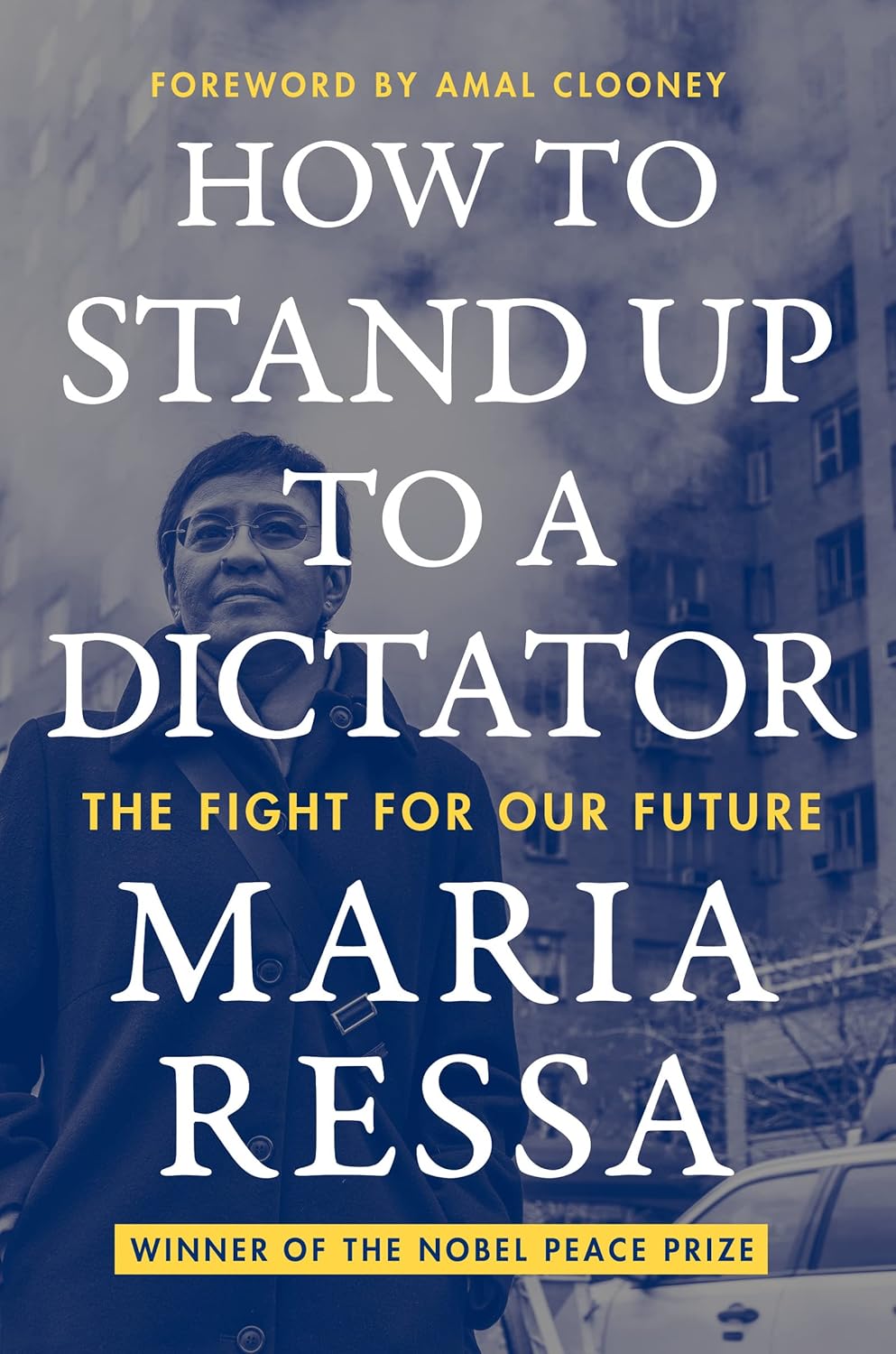
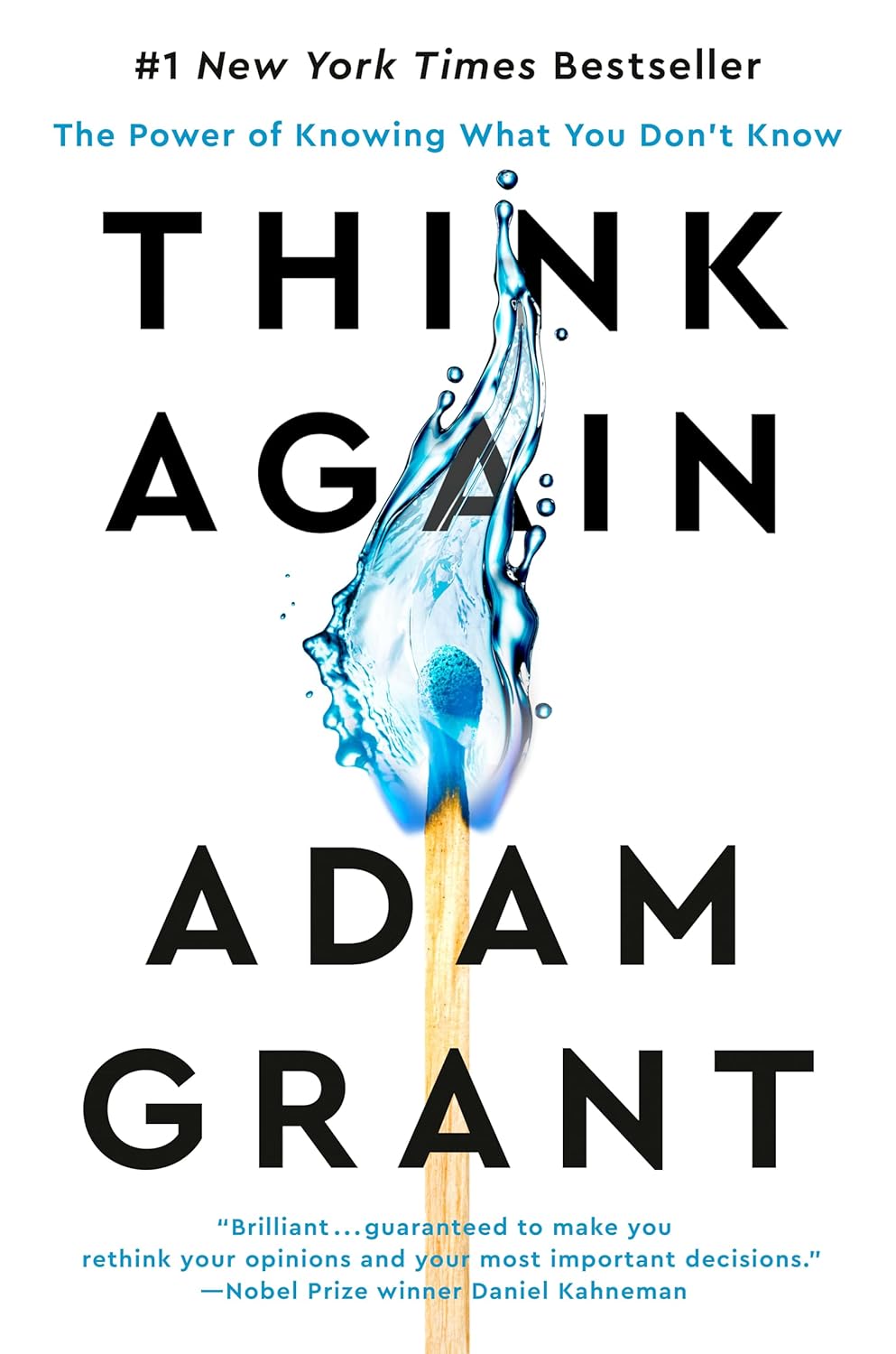
Today is the last look at At a Loss for Words for book club. Next month we'll be reading The Seven Rules of Trust by Wikipedia founder Jimmy Wales. If you like this content become a member to keep it coming.
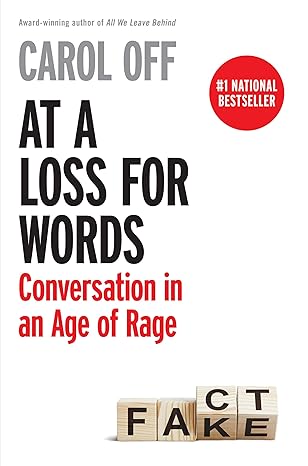
The purpose of Carol Off's book is right in the title, she feels that we've lost the meaning of some key words in society which makes it hard to have discussions with people across political lines1. The specific words Off tackles are:
- freedom
- democracy
- truth
- woke
- choice
- taxes
The book explores how each of these words have been weaponized in political discussion so that their meanings are so charged the words are hard to use. Truly none of these words are easy words to grapple with. What is the meaning of democracy and who gets to decide the participants in democracy? Where does your individual freedom erode my freedom in a way that means we need rules that curtail someone's freedom to do what they want?
Reading this book amid rising political polarization makes it obvious that Off is not making an abstract argument about the meaning of words. We're now highly polarized at both ideological extremes of the political spectrum making conversation hard. We can no longer disagree but be civil, we have to win every argument and show that our views are better, not just different.
Freedom
Looking at freedom, Off walks through how the far right has weaponized it to mean that they don't need to respect the rights of others2. That their freedom of intolerance overrides other's right to exist. We can see this in many countries with anti-trans laws on the books after a moral temper tantrum from the far right, and Christians in general.
Off ends this discussion asking us to expand our views on freedom to include more types of people3. This maps closely with circles of moral concern, which I first heard about in Moral Ambition. Bregman talks about the circle of people that you count as "like you" which expands and contracts based on scarcity. When we feel like we're fighting to just get by, the circle of people we view as like us and deserving resources gets smaller. When there is plenty it gets bigger.
Given that the share of company profit that goes to workers has stagnated since 19804, we're all feeling the pinch unless we're at the very top end of the income spectrum. That means it's harder for anyone to expand their ideas of who deserves freedom, which is why we see a backlash against immigrants in many Western nations.
Democracy
Universal suffrage is regarded as a worthy ambition so long as the universe is limited to a specific class, cultural and racial elites. Democracy is embraced until there is a risk that more people will want the same rights and freedoms. - At a Loss For Words Pg 62
Here Off mimicked much of what we read it in Take Back the Fight, which made a strong case that many of the feminist gains of the late 1900's were really more about giving rights to white middle-class and affluent women and did little to address the rights of poor and racialized women. That the feminist waves were bound to a preferred class, and once women that weren't white started to push the movement harder most of the white women abandoned it.
When speaking of democracy Off walks through how the US, and Canada, talk a big game about democracy and yet have a long history of limiting who can participate in it. From stealing First Nations land5 to not making clean water a priority for First Nations, many groups are thought of as not citizen enough to gain the rights of the rest of the population.
A good way to understand the reduction in democracy is to frame it with scarcity and circles of moral concern. As middle class wages have stagnated, status slips and economic freedom fees limited it becomes easy to jump to limiting the rights of others as populist leaders try to blame anything but the structural problems in the system that have allowed this to happen6. We've now moved to a point where the lower interest rates that made money move easily in the economy no longer mask the reduction in purchasing power for much of society7.
If you reject the premise of equality for all regardless of race, gender, or sexual orientation, and allowing those citizens the right to decide on leadership - you can't lay claim to true democracy8.
Truth
For many the fact that they have power means they feel they have the right to dictate truth. We can see this in the US currently as Donald Trump says whatever he wants, violating laws and telling lies my 9-year-old can see through, just because he is President9. Unfortunately the US was seen as a bastion of democracy and the slide away from truth gives license to autocrats around the world to use the autocrat playbook10.
Then we have sites like Facebook that dictate truth, with one whistle blower saying that there is a whitelist for sites like Breitbart that lets them spread lies and violate Facebook policies without repercussions11. Others claim that Facebook has an emergency "break glass" feature that allows them to turn up the reach of news organisations and down the reach of hyperpartisan sites like Breitbart12. Which means every day you see misinformation on Facebook they made a choice to allow it to flourish.
In response to a Canadian law that was going to make Facebook share some revenue with news publishers, they just took all news off Facebook. So in Canada if you see a site claiming they publish news linked to on Facebook, it's not seen as a trustworthy source of news by Facebook.
The result is an information environment on Facebook that privileges misinformation.
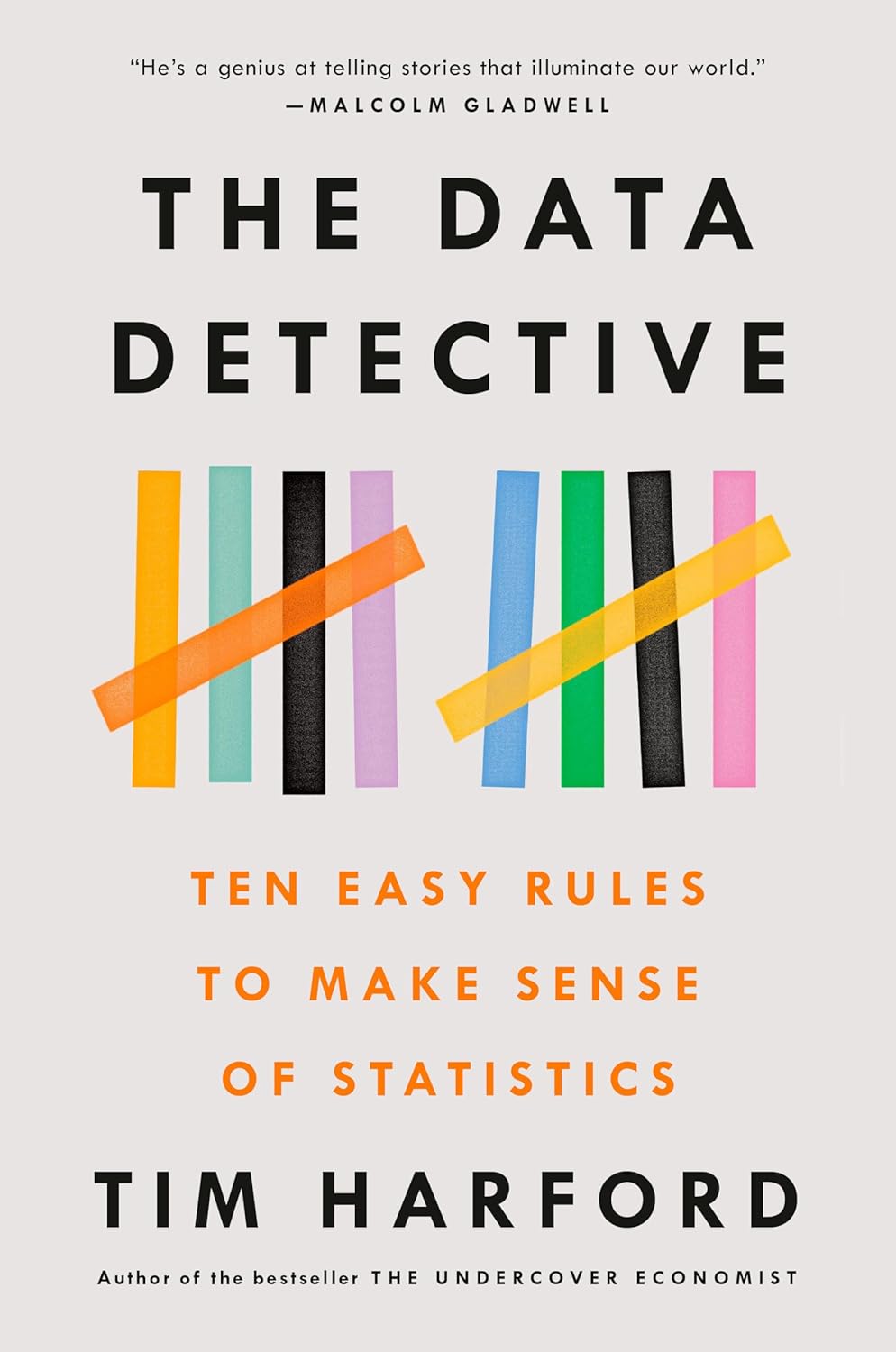
To combat this we need to remember that misinformation can be beautiful too13, and in fact the more effort put into making the data look pretty the more you need to question what they're trying to hide. When you're trying to talk about truth ask yourself if you could explain it to a child without them looking at you like you're crazy14.
Far too often a child that hasn't been trained by society who they should dislike reveals where we're limiting those we view as like us. A loose handle on truth, and how to evaluate it, makes these types of traps far too easy to fall into.
Woke
Being "woke" started as a phrase used by Black people in the 19th century to remind them to be aware of their surroundings15. There was very real danger that they could walk into the wrong bar, or end of town, and be killed or harassed without recourse. The police didn't care because those affected were Black and thus unworthy of protection by the state.
Today the far right has taken that word and turned into a pejorative term. To be woke is to support some, seemingly outlandish far left views.
To be fair, in some areas the left has gone too far. It can be hard to form any coalition now because to join an organisation trying to stop climate change you must align on all causes and ideas of the most radical and loudest person in the room16.
Both the left and right have increased polarisation. The right cites being "woke" as destroying any morals in society, and the left cites microaggressions and won't take an apology without demonising someone first.
Choice
The conservative right wants small government17 that stays out of your business, but spends a lot of time getting in the business of those that don't agree with their position. They pushed a campaign that rolled back abortion rights in the US which is seen as a win for conservatives. They seem to quest after the Leave it to Beaver family and feel that if they force women to have unwanted children it's going to happen.
In reality, women will die of sepsis and children will live in poverty because their small government and anaemic social services won't support these families that didn't want children18.
The US already has one of the highest maternal mortality rates of any developed nation with 3319 deaths per 100,000 live births20 due to pregnancy-related issues. Texas leads the way in this with their own health board saying 90% of maternal deaths were preventable with proper medical intervention21.
What the far right really wants is the ability for us to choose the things they agree with. They use their freedom to limit the freedom of others in some faulty view that conservatives have the only line on what choices are right.
This has gotten easier as scarcity has contracted the purchasing power of the middle class. Where we were once willing to live and let live, many now strive to ensure that no one is able to make a choice that might limit them in the future.
Taxes
When I look at my tax bill every year I admit that I'm not super happy about the amount of money going out of my pocket. But I also acknowledge that as a middle-class person in Canada I couldn't afford the roads I drive on, or the free medical care I get without taxes22. While making a decent income that many in my own country would envy, I still feel the push of scarcity in my life and have to fight against the desire to shrink my circle of moral concern because it already feels so tight for me.
For many taxes are weaponized. Racialized citizens pay taxes to a government that will turn around and use that money to oppress and limit their freedom23. In 1951 corporate taxes were about 28% of the Canadian Federal budget and declined to 12.2% by 1972. During that same period the share taken from personal income went from 26.7% to 49.9%24.
Businesses, and the super wealthy, continue to be given tax breaks while services languish and more money comes out of the pockets of those who can't afford much more. Those that pay their taxes without any impact on their lifestyle fight hard to ensure that no one else will benefit from the money they've earned25.
The Koch brothers specifically have funnelled hundreds of millions of dollars to organizations decrying Medicaid, public schools, unions and any other social service that is supported by taxes and reduces the scarcity for those they hope to employ at poverty wages26. I couldn't help but find it interesting how the far right has latched onto the idea that George Soros uses shady funding mechanisms to support ideas they don't like, while they push the ideas on the back of the Koch brothers funding27.
Should you read At a Loss for Words by Carol Off?
Yes...and no. Yes because it's a good look at how the conservative right has weaponized the words we use. No, because it's super frustrating to read parts of it, like the Soros/Koch financing section, and watch the hypocrisy of the conservative far right as they take money from billionaires and claim anything they don't like is funded by dark money.
Off doesn't really give a way out of the predicament either, like we see in a book we read last year called Think Again. I mean we know there are lots of things going wrong in the world, how about we attempt to come up with some solutions?
Pg 3 ↩
Pg 16 ↩
Pg 50, 51 ↩
Automation and the Future of Work Pg 9, 10 ↩
Pg 67 ↩
Corporate Control Pg 157 ↩
Pg 95 ↩
Pg 114 ↩
Pg 120 ↩
Pg 137 ↩
How to Stand up to a Dictator Pg 230 ↩
The Data Detective Pg 216 ↩
Moral Ambition Pg 176 ↩
Pg 159 ↩
Moral Ambition Pg 77 ↩
Pg 233-235 ↩
Pg 256 ↩
Note Off gets this statistic wrong citing 33 out of 1000 and refers to this CDC study which reports 33 out of 100,000 live births ↩
Pg 252 ↩
Pg 252 ↩
Pg 270, 271 ↩
At the Trough Pg 49 ↩
Pg 264 ↩
Pg 283 ↩
Pg 285 ↩